
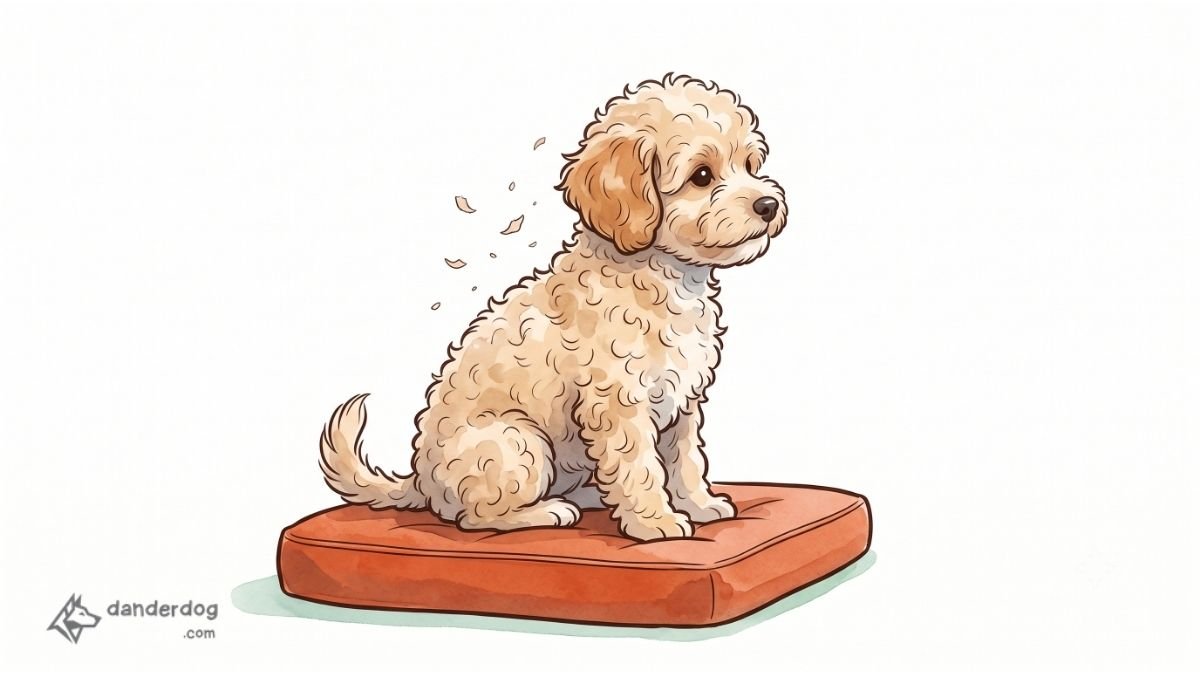
I get asked whether Maltipoos are hypoallergenic more than almost any other small dog, and I understand why.
A Maltese crossed with a Poodle sounds like the safe bet: two low-shedding parents, a soft teddy-bear coat, and a reputation that follows the breed everywhere. The honest answer is messier than the breeders make it sound.
No Maltipoo is truly hypoallergenic, because no dog is. What a Maltipoo actually gives you is a tilt in the odds, and how far that tilt goes depends on a genetic coin flip you cannot see when a puppy is eight weeks old.
The wider small-breed picture is in my small hypoallergenic dogs guide if you want the lay of the land first. This page stays on the Maltipoo: which part of the reputation the dog earns, and which part is just breeder copy.
Who this is for: you have dog allergies, or someone under your roof does, and a Maltipoo is near the top of the list. Read this before you pay a breeder. These puppies sell at a premium, and returning one you have already bonded with hurts far more than the price tag.
If anyone at home has asthma or a history of strong reactions, treat this as background and start with an allergist. No Maltipoo clears that bar on its own, and no F1-versus-F1b label changes it.
Key takeaways
- No Maltipoo is 100 percent hypoallergenic. Both parents are low-shedding, but low shedding is not low allergen.
- The trigger is dander and saliva, not loose hair. A Maltipoo makes both, coat or no coat.
- Coat inheritance is a lottery. One litter can produce a low-shedding puppy and a shedder, and a photo will not tell you which.
- Generation tilts the odds, it does not settle them. An F1b leans curlier and lower-shed, but no study measures allergen by Maltipoo generation.
- The dog’s sex may matter more than its coat. A real share of dog-allergic people react mainly to a male-only protein, so a female or neutered Maltipoo can change the result.
- The step that actually protects you costs nothing, and it beats guessing at the coat lottery. Spend real, repeated time with the exact puppy before you buy.
Are Maltipoos hypoallergenic?
Not reliably.
A Maltipoo is a Maltese crossed with a Poodle, and both parents are low-shedding breeds the American Kennel Club lists as good for allergy sufferers.
That gives a Maltipoo better odds than a heavy shedder. It does not make the dog hypoallergenic, because every Maltipoo still produces the skin and saliva proteins people actually react to.
One measurement sits under the whole hypoallergenic pitch. Back in 2012, a study in the Journal of Allergy and Clinical Immunology checked Can f 1, the main dog allergen, in the coats and homes of breeds sold as hypoallergenic next to ordinary ones. The marketed breeds carried just as much, a few carried more, and their homes were no cleaner. Crossing two of those breeds does not cancel a protein neither parent stops making.
The label sells puppies. It does not lower the protein in your living room.
I am not saying this to talk you out of a Maltipoo. You are about to make a 12-to-15-year decision, and you deserve the real odds instead of the brochure.
Do Maltipoos shed?
Yes, lightly, and less than most dogs, but “less” is the honest word, not “never.”
Both parent coats shed little. The Poodle’s tight curl and the Maltese’s silky single coat each drop minimal loose hair, and a Maltipoo usually lands somewhere between them.
What does come loose tends to catch in the curl instead of falling on the floor, which is real and genuinely nice in a small home.
Caught hair is not gone hair, though. The dander riding on it stays in the coat until you brush or bathe it out, which is why grooming does more allergen work on a Maltipoo than the shedding rate suggests.
Where do Maltipoo allergens actually come from?
From skin and saliva, not the coat itself.
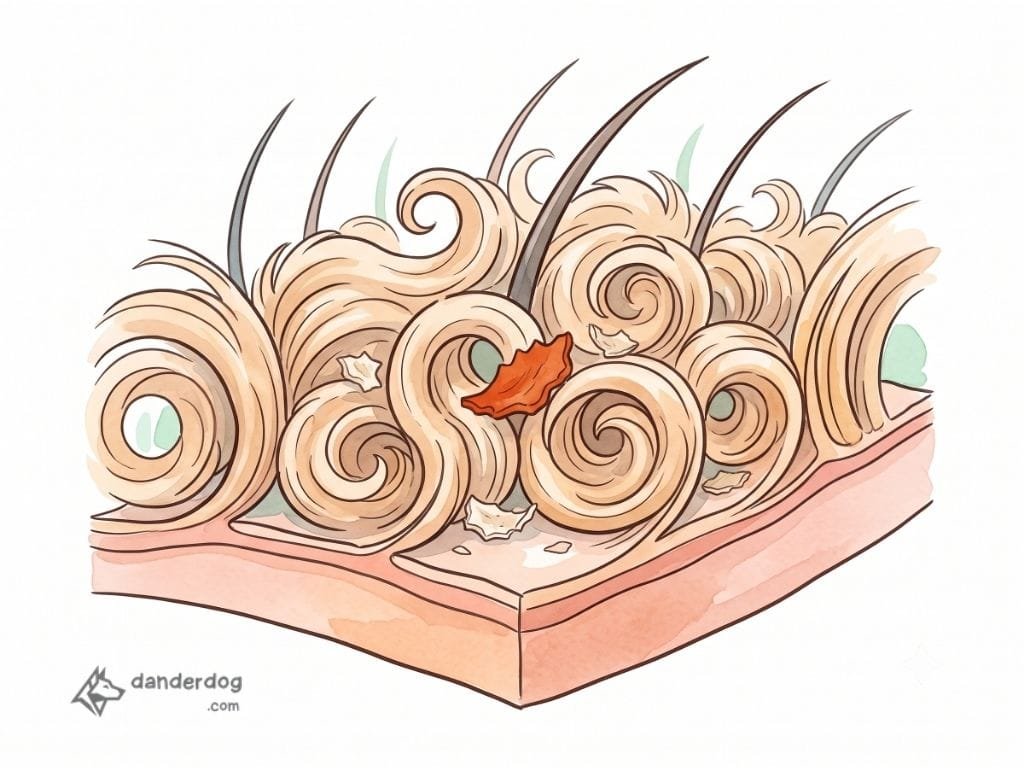
The proteins people react to, mainly Can f 1, are made in a dog’s skin glands and saliva, then carried onto the coat and into the air on tiny flakes of dead skin called dander.
A Maltipoo grooms and licks like any dog, coating that low-shed hair in dried saliva. The curl traps it close to the skin rather than releasing it, which cuts airborne hair but concentrates allergen right where you pet the dog.
I had to sit with that when I first mapped it out. The same trait people love, a coat that holds its own hair, is also the trait that holds allergen against the skin until wash day.
Does the generation matter? F1, F1b, and F2 Maltipoos
Somewhat, and not the way breeders price it.
Generation changes the odds of a curlier, lower-shedding coat, and that is the honest extent of it. An F1 is a 50/50 first cross with the widest range of coat outcomes. An F1b is bred back to a Poodle, so it leans curlier and lower-shed, which is why it costs more and gets marketed as “more hypoallergenic.”
Here is the catch no breeder page mentions. No study has ever measured allergen output by Maltipoo generation, so “more hypoallergenic F1b” is a claim about shedding and coat texture, not about the Can f 1 your immune system reacts to. A curlier coat can still carry every bit as much protein.
The Maltipoo generation matrix
| Generation | Genetics | Typical coat | Shedding tendency | What it actually changes for allergies |
|---|---|---|---|---|
| F1 Maltipoo | 50% Maltese, 50% Poodle | Wavy to curly, widest range | Low to moderate | Least predictable; one litter can vary a lot |
| F1b Maltipoo | About 75% Poodle, 25% Maltese | Usually curlier and tighter | Lowest of the three | Better odds of a low-shed coat, not proven lower allergen |
| F2 Maltipoo | F1 crossed with F1 | Highly variable | Variable | Coat can throw back either direction; least predictable of all |
| Maltese parent | 100% Maltese (AKC low-allergen) | Silky single coat | Low | Spreads saliva through constant self-grooming |
| Poodle parent | 100% Poodle (AKC low-allergen) | Tight curly single coat | Very low | Best-documented low shedder, yet measured among the highest for coat allergen |
Read that last row twice. A 2005 study in the journal Allergy measured Can f 1 on the fur of 288 dogs and put the Poodle near the top of the range, above a much larger Labrador, with hair length making no measurable difference.
The parent breed everyone crosses for low allergen is one of the higher coat-allergen producers on record. That is the cleanest proof that low shedding and low allergen are two different things.
Are Maltipoos good for allergy sufferers?
For mild, tested allergies, often yes. For asthma or strong reactions, not on the coat’s promise.
A low-shedding Maltipoo can genuinely work for someone with mild dog allergies who has spent time around the specific dog and reacted well. Plenty of people live happily with one. The mistake is treating the breed name as the clearance instead of your own tested response.
If you have asthma or a history of serious reactions, the honest answer changes. No Maltipoo, and no generation, is safe enough to skip an allergist and a supervised exposure plan first.
That is not caution for its own sake. A reaction that starts as sniffles in a breeder’s kitchen can turn into a real asthma problem once the dog is sleeping down the hall.
Does a male or female Maltipoo matter for allergies?
It can matter more than the coat does.
This is the most overlooked question on the whole topic, so slow down here. A meaningful share of dog-allergic people react mainly or only to Can f 5, a protein made in the prostate of male dogs. Females and neutered males make little to none of it.
A 2020 randomized trial found that children sensitized only to Can f 5 reacted to male dog dander but tolerated female dog dander under controlled testing. In component-testing studies, a large share of dog-allergic people carry this male-specific sensitivity.
So before you rule out a Maltipoo, or any dog, ask your allergist for component testing.
If Can f 5 turns out to be your main trigger, a female or neutered male Maltipoo could be the difference between a dog that works and one that does not. That single blood test is the cheapest high-value step on this page.
What the male-dog question means for you
| If you react to… | What it means | What to do |
|---|---|---|
| Can f 5 only (male-specific) | You may tolerate a female or neutered male Maltipoo, since Can f 5 comes from the prostate | Ask your allergist for component testing before ruling dogs out |
| Can f 1 and other components | Standard dog allergy, not sex-specific | The individual dog and washing matter more than sex; test the exact dog |
| Untested | You are guessing on the most fixable variable there is | Get component-resolved testing before you commit to a puppy |
Maltipoo vs the low-allergen small breeds
If low allergen is the whole goal, a proven purebred beats a cross.
A Maltipoo’s pull is temperament and looks as much as allergies, and that is a fine reason to want one. But if your single priority is the best odds against a reaction, a Bichon Frise or a Poodle hands you a settled, predictable coat instead of a genetic guess.
The comparison below grades allergen confidence, not cuteness.
| Breed | Honest label | Coat predictability | Allergen confidence | The honest note |
|---|---|---|---|---|
| Toy / Miniature Poodle | AKC low-allergen | Settled, predictable | B | Best-documented low shedder, yet high measured coat allergen. Grooming-heavy. |
| Bichon Frise | AKC low-allergen | Settled, predictable | B | Predictable low-shed coat; best small-purebred odds. Needs frequent grooming. |
| Maltese | AKC low-allergen | Settled, predictable | C | Little loose hair, but self-grooming spreads saliva through the coat. |
| Maltipoo | Designer hybrid | Unpredictable, varies pup to pup | C | Coat is a lottery; one litter can produce a low-shedder and a shedder. |
| Cavapoo | Designer hybrid | Less predictable still | C to D | The Cavalier parent sheds, so a Cavapoo can inherit a shedding coat outright. |
The Maltipoo lands at a C for the same reason it sits on the small breeds hub at a C: coat inheritance is a coin flip, so buying a puppy is buying a guess.
A Bichon or a Poodle is the more honest pick if allergen odds are all you care about.
How do you test before you buy a Maltipoo?
You spend real time with the exact puppy, and you test yourself, before any money changes hands.
The breed and the generation are only filters. The individual dog and your own body decide the outcome, and two Maltipoo littermates can differ more than two separate breeds do. Here is the order that actually protects you.
- See an allergist first if you have asthma or strong reactions, and ask for component testing so you know whether Can f 5, the male-dog protein, is your trigger.
- Meet adult dogs from the same lines, not just the puppy. A puppy’s coat has not settled, so the parents and older siblings show you the real range.
- Spend real, repeated time indoors with the specific puppy. Visit more than once, windows closed, and stay long enough for a reaction to surface. Two hours beats two minutes.
- Push into real exposure. Let the puppy lick your hand, then touch your face, and sit where its dander settles. A polite ten-minute cuddle hides the thing you need to know.
- Get a return agreement in writing before you fall in love. Decide what happens if you react, so a bad reaction never turns into a rehoming.
Picture yourself in a breeder’s living room holding an eight-week-old Maltipoo that has not triggered a single sniffle in ten minutes. That proves almost nothing. The reaction you care about shows up over hours, after the dog has licked you and shed onto the couch.
Common mistakes
- Reading “Maltipoo” as “hypoallergenic.” The cross improves your odds; it does not clear an asthma or severe-allergy household. Test your own reaction, every time.
- Paying up for an F1b as a guarantee. A backcross tilts toward a curlier, lower-shed coat, not toward proven lower allergen. You are buying better shedding odds, not a safe dog.
- Ignoring the dog’s sex. If you react to Can f 5, a female or neutered male can change everything and the coat cannot. Get component testing before you decide.
- Judging a puppy on one short outdoor visit. Wind scatters dander and ten minutes hides a slow reaction. Meet indoors, more than once, for real time.
- Skipping saliva exposure. Focusing only on shedding while letting a puppy lick your hands and face feeds you the exact proteins you are trying to avoid.
FAQ
Are Maltipoos 100 percent hypoallergenic?
No. No dog is 100 percent hypoallergenic, and a Maltipoo is no exception. They shed little and their curl traps loose hair, but they still make Can f 1 in their skin and saliva, so a sensitive person can still react. Judge the individual dog and your own tested response, not the breed label.
Which Maltipoo generation is best for allergies?
An F1b, at about 75 percent Poodle, has the best odds of a curly, low-shedding coat, so it is the common pick for allergy homes. But no study measures allergen by generation, so a lower-shedding coat is not a proven lower-allergen one. Treat it as better shedding odds, not a guarantee.
Do female Maltipoos cause fewer allergies than males?
For some people, yes. A share of dog-allergic people react mainly to Can f 5, a protein only male dogs produce, so a female or neutered male Maltipoo can trigger less. Component testing from an allergist tells you whether this applies to you before you choose a puppy.
Do Maltipoos shed?
Yes, lightly. Both parent breeds are low shedders, and a Maltipoo usually drops little loose hair, much of it caught in the curl. That is easier on a home than a heavy shedder, but the trapped hair still carries dander until you brush or bathe it out.
How do I know if I will react to a Maltipoo?
Spend real time with the specific dog before you commit. Visit indoors more than once with the windows closed, let the dog lick your hand and touch your face, and stay long enough, ideally a couple of hours, for a slow reaction to show. A short outdoor meet-and-greet hides what you most need to know.
Are Maltipoos good for people with asthma?
Not on the breed’s reputation alone. Asthma raises the stakes of any reaction, so no Maltipoo or generation clears an asthma household by itself. See an allergist, get component testing, and run a supervised exposure plan with the exact dog before you decide.
Sources
Sources (10)SourcesShow sourcesHide sources
- Vredegoor DW, Willemse T, Chapman MD, Heederik DJJ, Krop EJM. Can f 1 levels in hair and homes of different dog breeds: lack of evidence to describe any dog breed as hypoallergenic. Journal of Allergy and Clinical Immunology. 2012;130(4):904-909. https://pubmed.ncbi.nlm.nih.gov/22728082/
- Ramadour M, Guetat M, Guetat J, El Biaze M, Magnan A, Vervloet D. Dog factor differences in Can f 1 allergen production. Allergy. 2005;60(8):1060-1064. https://pubmed.ncbi.nlm.nih.gov/15969688/
- Schoos AMM, Chawes BL, Bloch J, et al. Children monosensitized to Can f 5 show different reactions to male and female dog allergen extract provocation: a randomized controlled trial. Journal of Allergy and Clinical Immunology: In Practice. 2020;8(5):1592-1597. https://pubmed.ncbi.nlm.nih.gov/31863911/
- Villalta D, Tonutti E, Bizzaro N, et al. Frequency of allergic sensitization to Can f 5 in North East Italy: an analysis of 1403 ISACs 112 (Component Resolved Diagnosis) collected retrospectively. European Annals of Allergy and Clinical Immunology. 2019. https://pubmed.ncbi.nlm.nih.gov/30983305/
- Hodson T, Custovic A, Simpson A, Chapman M, Woodcock A, Green R. Washing the dog reduces dog allergen levels, but the dog needs to be washed twice a week. Journal of Allergy and Clinical Immunology. 1999;103(4):581-585. https://pubmed.ncbi.nlm.nih.gov/10200004/
- Käck U, Asarnoj A, Grönlund H, et al. Molecular allergy diagnostics refine characterization of children sensitized to dog dander. Journal of Allergy and Clinical Immunology. 2018;142(4):1113-1120. https://pubmed.ncbi.nlm.nih.gov/29852259/
- Nicholas CE, Wegienka GR, Havstad SL, Zoratti EM, Ownby DR, Johnson CC. Dog allergen levels in homes with hypoallergenic compared with nonhypoallergenic dogs. American Journal of Rhinology & Allergy. 2011;25(4):252-256. https://pubmed.ncbi.nlm.nih.gov/21819763/
- American Kennel Club. Maltese. https://www.akc.org/dog-breeds/maltese/
- American Kennel Club. Poodle (Toy). https://www.akc.org/dog-breeds/poodle-toy/
- American Kennel Club. Hypoallergenic dogs. https://www.akc.org/dog-breeds/hypoallergenic-dogs/
Related guides
- Small hypoallergenic dogs: the honest low-dander guide. The parent hub, with the full grade matrix across ten small breeds.
- Hypoallergenic dogs: what the science actually says. The broader breed hub, for the full label breakdown.
My honest take, after all of it: a Maltipoo can be a wonderful, manageable companion, but “hypoallergenic” on the tag is doing less work than the price is. Pick for the individual dog, ask about its sex before its generation, and test your own reaction first.
So which generation are you being offered, and have you spent real indoor time with the actual puppy yet?
— Adrian V.