
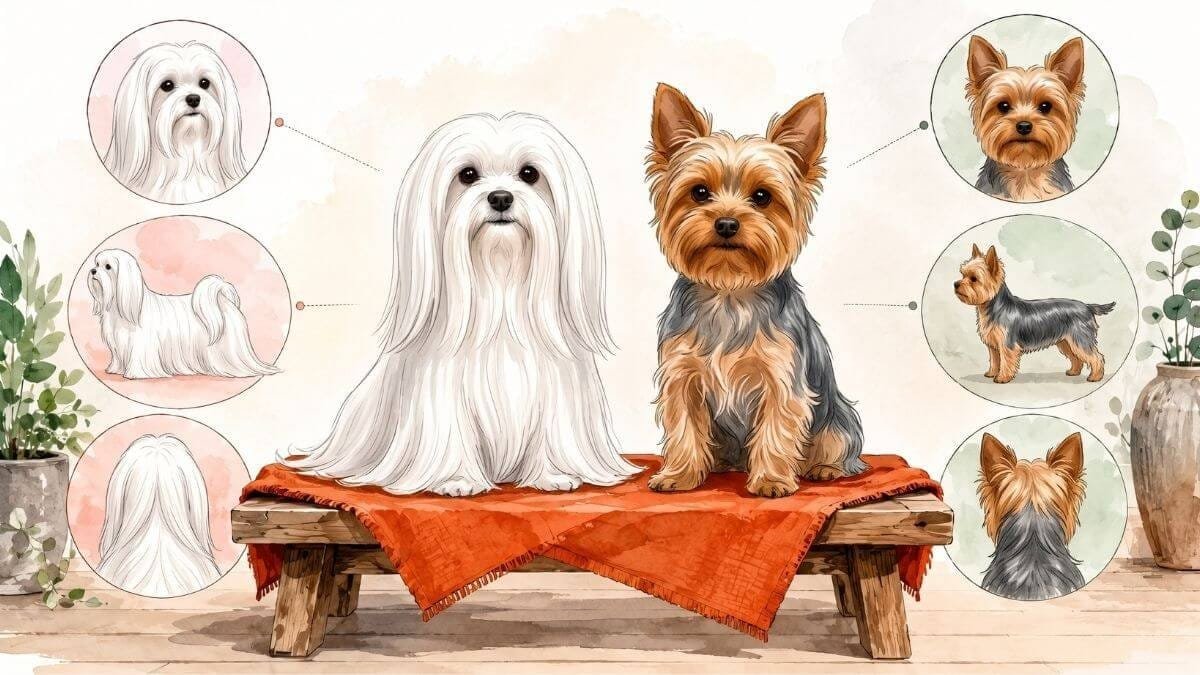
Two toy dogs, both famous for barely shedding, both sold to allergy families as the easy choice. Most maltese vs yorkie comparisons stop right there, and call it a tie.
It is not a tie. The Maltese sits on the American Kennel Club’s low-allergen list and the Yorkshire Terrier does not, and the one study that put a number on Yorkie fur found a lot more allergen than anyone selling them mentions.
If you want the wider small-breed view before the head-to-head, I keep it in the guide to small hypoallergenic dogs. This page is the pair: what separates them on dander, shedding, size, grooming, and temperament, and which one I would pick for a reactive household.
The short version
| Maltese | Yorkshire Terrier | |
|---|---|---|
| Honest label | AKC low-allergen | Adjacent low-shed (not low-allergen) |
| Sheds | Very little | Very little |
| Allergy verdict | Better odds, still not safe | Low shed only, no allergen claim |
| Best fit | Quiet homes, someone around most of the day | Busy, alert households that can handle barking |
Who this is for: you are choosing between these two toy breeds and someone in the house reacts to dogs. Read it while the decision is still free to change.
If asthma or a history of strong reactions is in the picture, neither of these dogs gets a green light here. That is an allergist conversation and a planned exposure visit, before any deposit changes hands.
Key takeaways
- Both breeds shed very little. Only the Maltese is classed as low-allergen, and even that is odds, not safety.
- The Yorkie’s reputation is built on shedding, not on allergen. Nothing in the research links the breed to lower allergen output.
- When researchers measured allergen on the fur of 288 dogs, the Yorkshire Terrier landed near the top of the range, roughly eight times the Labrador’s level.
- Nobody has published an allergen measurement for the Maltese. Its low-allergen listing rests on coat type, not on a number.
- The Maltese is the calmer dog. The Yorkie is the louder, bolder, more terrier one, and that gap is bigger than the allergy gap.
- Grooming is heavy for both. Daily combing and a real bathing schedule matter more day to day than which breed you picked.
Is either breed actually hypoallergenic?
No.
Neither the Maltese nor the Yorkie is hypoallergenic in the way the word gets used in listings. The label means a breed that sheds less and gets marketed as easier on allergy sufferers. It is a sales category, not a medical one, and no kennel club or allergy body certifies it.
Here is the part that surprised me while I was pulling sources for this page. Every single top-ranking maltese vs yorkie comparison I opened called both breeds hypoallergenic, and not one of them cited anything.
The measurement everyone skips is the one worth knowing. A 2012 study in the Journal of Allergy and Clinical Immunology tested Can f 1, the main protein from a dog’s skin and saliva that people react to, across breeds sold as hypoallergenic and ordinary breeds. The marketed breeds carried more of it in their coats, not less, and their homes were no cleaner.
So the honest framing for this comparison is narrower than the brochure. One of these breeds has a low-allergen listing and the other does not, and that difference is real but small next to the difference between two individual dogs.
Neither breed comes with a promise. One of them just comes with slightly better odds.
Yorkie vs maltese allergies: which one is better for an allergy household?
The Maltese, by a margin that is real but smaller than you would hope.
The Maltese carries the American Kennel Club’s low-allergen listing and the Yorkshire Terrier does not. Both dogs have a single hair-type coat with no dander-trapping undercoat, so both drop very little. The split is in what the classification actually rests on, and once you look, the Yorkie’s case gets thin.
Picture the two puppies in front of you at eight weeks. They look equally clean, equally tiny, equally harmless. Nothing you can see at that moment tells you which one your immune system will pick a fight with.
The number that separates them comes from a 2005 study in the journal Allergy that measured Can f 1 on the fur of 288 healthy dogs across eight breeds. The Yorkshire Terrier averaged 16.72 micrograms per gram of fur. The Labrador Retriever, the breed used as the ordinary-dog comparison, averaged 1.99, and the Labrador was the only breed whose levels separated cleanly from all the others.
I read that row twice to be sure I had the breeds the right way round.
A Yorkie, one of the smallest dogs in the study, was carrying roughly eight times the coat allergen of a Labrador. The same study found hair length made no measurable difference at all, which quietly removes the main argument people make for both of these breeds.
Now the honesty note that no other page in this comparison will give you. The Maltese was not in that study, and I could not find a published Can f 1 measurement for the breed anywhere.
Its low-allergen listing is a judgment about coat type, not a lab result.
What is the difference between Yorkie and Maltese dander?
Less than the labels suggest, because the bigger vector is saliva.
Dander is the flakes of dead skin every dog sheds constantly, and both of these breeds produce it at ordinary rates. The difference people imagine, one breed making less dander than the other, has never been measured. What has been established is where the main allergen actually comes from, and it is not the skin.
Researchers who cloned the protein in 1997 found that Can f 1 is made in tongue tissue, in the same glands that produce saliva. The dog licks itself, the saliva dries on the hair, and the flakes break off when you pet it. Both of these breeds groom themselves constantly, and the Maltese in particular spends a lot of the day licking its coat.
That is why a page like are maltese hypoallergenic lands on “low shed, real catch” rather than a clean yes. The silky coat is genuinely tidy, and it is also a wick for dried spit.
The Maltese vs Yorkie allergen scorecard
I graded the two on the six things that actually decide how a household copes, A through D, with the honest reason in the last column. Notice where the grades cluster before you read the rows. Neither dog gets above a B on anything that touches allergen, because the evidence to justify one does not exist.
| Decision vector | Maltese | Yorkshire Terrier | The honest note |
|---|---|---|---|
| Allergen confidence | C | D | Maltese has the AKC low-allergen listing but no published measurement. The Yorkie has a measurement, and it was high. |
| Loose hair in the home | B | B | Genuinely equal. Single coats, no undercoat, almost no seasonal drop. This is the one thing both breeds fully earn. |
| Saliva spread | C | C | Both self-groom heavily, so both coat their hair in dried saliva. Petting is what puts it in the air. |
| Grooming load | C | C | Daily combing for both. The Maltese mats faster and stains visibly, the Yorkie needs more scissor work. |
| Calm in the house | B | D | The widest real gap between these two. Maltese are quiet companions, Yorkies are vocal alert dogs. |
| Predictability | B | B | Both are established purebreds with settled coats, so you know what the adult dog becomes. That beats any cross. |
Read down the allergen row and the calm row and you have the whole decision. On allergy odds the Maltese wins narrowly. On living with the dog day to day it wins by a lot more, and that is the honest reason most allergy households end up there.
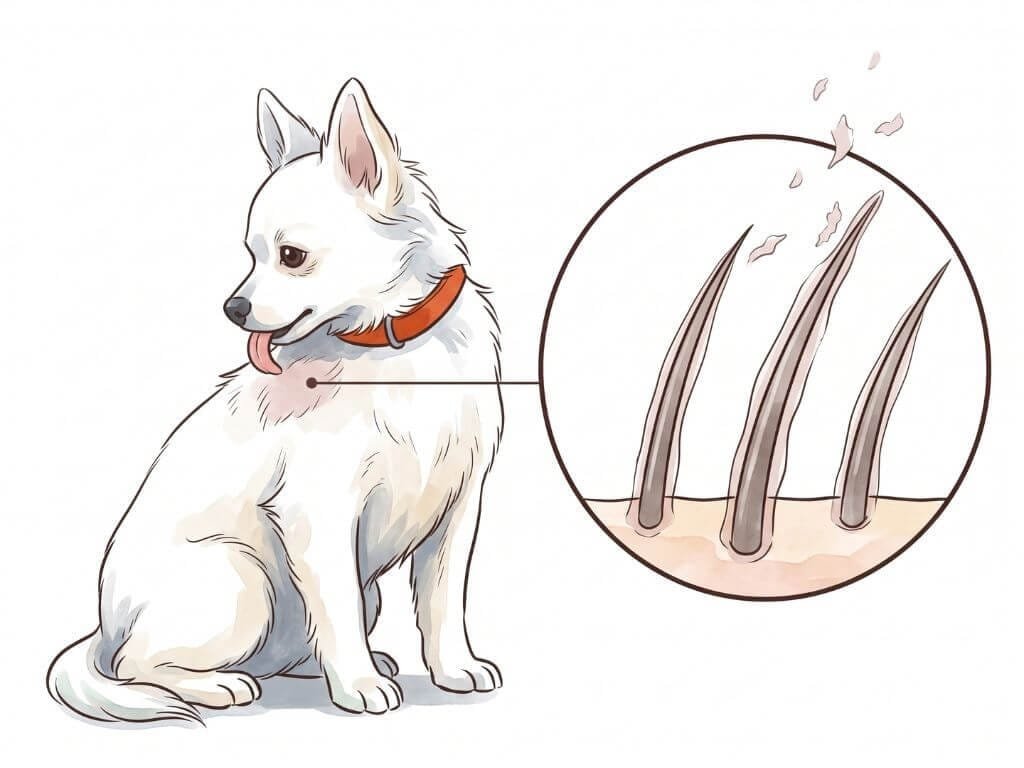
A hair-type coat with no undercoat is why these two drop so little. It is not why they are easier to live with. The protein people react to comes from saliva and skin, and self-grooming lays it along the coat, where it dries and flakes off into the room. Low shedding moves less of it around. It does not stop it being made.
Maltese vs yorkie shedding: which one sheds more?
Neither, in any way you will notice.
Both breeds carry a single coat of hair with no woolly undercoat underneath. That undercoat is the part that blows out seasonally in a Labrador or a Husky and carries loose dander through the house. Without one, the hair grows continuously and falls out a few strands at a time, much like yours does.
You will still find hair, though it collects in the comb rather than on the sofa. When a strand lets go on either of these dogs, it usually stays tangled in the surrounding coat until you brush it out. That is why skipping grooming on either breed is worse for an allergy home than skipping it on a shedder.
Low shedding moves loose hair off your furniture. It does not move protein out of your air.
The 2005 fur measurements make that concrete. The Yorkshire Terrier is one of the lowest-shedding dogs anyone keeps, and it still measured among the highest for coat allergen in its study group.
So treat shedding as a housekeeping feature and nothing more. Both breeds pass that test, and it settles nothing about whether you will react.
Maltese vs yorkie size: which one is smaller?
The Yorkshire Terrier, but only just.
The AKC standard puts the Yorkie at up to 7 pounds, with most adults between 4 and 7. The Maltese standard is also under 7 pounds, with 4 to 6 preferred, and both breeds stand roughly 7 to 9 inches at the shoulder. In practice you are choosing between two dogs of nearly identical size, and the Maltese usually carries slightly more bone.
So the useful size question is not which one is smaller. It is what that fine bone structure means in a house with a toddler and a couch to jump off.
| Standard | Maltese | Yorkshire Terrier |
|---|---|---|
| Height at shoulder | 7 to 9 inches | 7 to 8 inches |
| Adult weight | Under 7 lb, 4 to 6 preferred | Not to exceed 7 lb |
| Typical lifespan | 12 to 15 years | 11 to 15 years |
| Coat | Long, straight, silky, pure white | Long, fine, straight, steel blue and tan |
| Build | Compact, slightly sturdier toy frame | Fine-boned and delicate |
| Watch for | Luxating patella, tear staining | Tracheal collapse, dental disease |
Both are fragile enough that a missed step off a couch can break something. The Yorkie carries one extra risk worth planning around: tracheal collapse, a weakening of the cartilage rings in the windpipe that shows up as a dry honking cough, is most common in toy breeds and the Yorkshire Terrier in particular.
Walk either dog on a harness, never a neck collar. It costs nothing and it is the single easiest thing on this page to get right.
Yorkshire terrier vs maltese grooming: which one takes more work?
The Maltese, mostly because white shows everything.
Both breeds need daily combing to the skin, and both need a groomer every six to eight weeks if you keep the coat long. The Maltese adds two jobs the Yorkie mostly avoids: a coat that mats faster because it is softer, and daily face-wiping to manage tear staining, the reddish-brown marks that build up under the eyes on white hair.
You will feel this on a Tuesday night with a comb in your hand and a dog that wants to be anywhere else. That is the real grooming cost, not the salon bill.
For an allergy household, though, the bathing schedule matters more than either of those. A 1999 study in the Journal of Allergy and Clinical Immunology found that washing a dog cut recoverable allergen from its hair by about 84 percent, but the levels were back to baseline within three days, which is why the authors concluded the dog needs washing twice a week. A 2025 hospital-dog study repeated the test with modern shampoos and got the same three-day window.
Twice a week is over a hundred baths a year. Do that with a harsh formula and you strip the skin, which makes it flake more, which gives you more dander than you started with. That is the whole argument for a gentle dog shampoo for sensitive skin, and it is a practical one rather than a marketing one.
| Task | Maltese | Yorkshire Terrier | Why it matters for allergies |
|---|---|---|---|
| Combing to the skin | Daily, 10 to 15 minutes | Daily, 10 minutes | Lifts trapped hair and dried saliva before it gets stirred into the air |
| Bathing, coat health | Every 1 to 2 weeks | Every 2 to 3 weeks | Baseline schedule for a healthy coat, not an allergy schedule |
| Bathing, allergen control | Closer to twice a week, if the skin tolerates it | Coat allergen rebounds to baseline in about three days | |
| Professional groom | Every 6 to 8 weeks | Every 5 to 8 weeks | A shorter clip is far easier to keep clean and comb daily |
| Face and eyes | Daily wipe, tear staining shows | Every few days, staining hides | Damp facial hair breeds yeast and irritated skin, on either dog |
Keeping either dog in a short puppy clip cuts the daily combing roughly in half and makes the twice-weekly wash realistic. It costs you nothing but the long show coat you were probably never going to maintain.
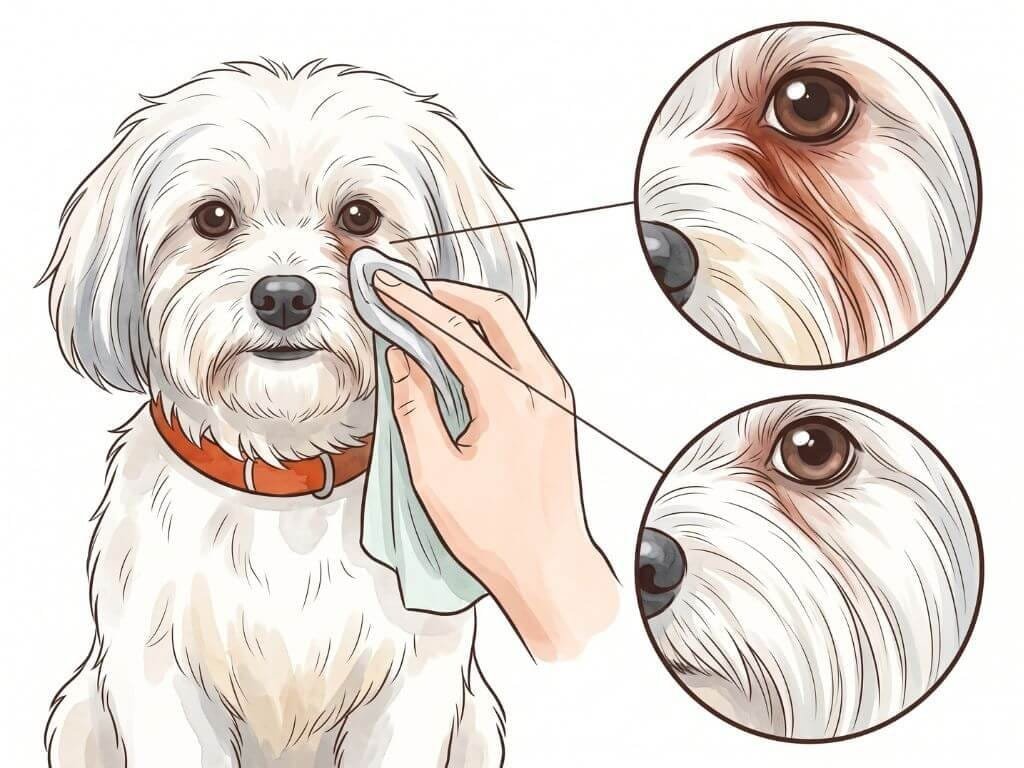
This is the job the Yorkie mostly avoids. Tear staining is damp hair holding colour against a white coat, so it builds fastest where the hair stays wet, and a daily wipe is the whole fix. Skip it for a fortnight and you are not cleaning a stain, you are waiting months for the hair to grow out.
Is a maltese gentler than a yorkie?
Yes, and it is the least ambiguous difference between them.
The Maltese was bred for one job, sitting with people, and it shows in a soft, steady, low-drive dog that warms to strangers. The Yorkshire Terrier was bred in 19th-century Yorkshire mills to kill rats, and that terrier engine did not get bred out. Yorkies are bolder, quicker to react, suspicious of visitors, and considerably more vocal.
If you have ever sat in an apartment while a seven-pound dog announced the elevator arriving one floor down, you already know which breed that was.
Barking is the practical version of this difference. Both breeds alert, but the Yorkie does it at more things and with far more conviction. In an apartment that becomes a neighbor problem long before it becomes a training problem.
The Maltese has its own catch, and it is the mirror image. A dog bred to be with you all day handles being left alone poorly, and separation anxiety is common in the breed. If the house is empty from eight to six, the calm dog is the one that struggles.
Pick the Yorkie for a busy, alert, well-trained household and the Maltese for a quiet one with someone usually home.
What about a Morkie?
Crossing the two does not average out the allergen question.
A Morkie is a Maltese bred to a Yorkshire Terrier, so a puppy can inherit either parent’s coat and either parent’s allergen output. That makes it a guess rather than a compromise. Judge the individual dog and give it a real exposure visit before you commit.
Common mistakes
- Treating “both are hypoallergenic” as settled. It is repeated on nearly every comparison page and sourced on none of them. Only the Maltese carries a low-allergen listing, and even that is odds, not protection.
- Reading low shedding as low allergen. These are the two least-shedding toy breeds around, and one of them measured near the top of its study for coat allergen. Shedding is a cleaning issue.
- Choosing on size. The two breeds are within a pound of each other. Nothing about that gap should decide anything.
- Skipping the grooming math. Daily combing plus a real bathing schedule is the actual commitment. Buy the breed you will still be grooming in year four.
- Meeting a puppy instead of an adult. An eight-week-old puppy has barely started producing what you react to. Spend unhurried time with adult dogs from the same lines.
- Buying before an allergist visit, if reactions have ever been serious. Component testing can show whether you react to the male-dog protein Can f 5, and that one result changes the plan for a lot of families.
FAQ
Is a Maltese or a Yorkie better for allergy sufferers?
The Maltese, narrowly. It carries the American Kennel Club’s low-allergen listing and the Yorkshire Terrier does not. Both shed very little, but shedding was never the allergy question. In one breed study, Yorkie fur measured about eight times the allergen of a Labrador’s, so the Yorkie’s reputation rests on hair, not on protein.
Is a Maltese gentler than a Yorkie?
Yes. The Maltese was bred purely as a companion and is calmer, quieter, and friendlier with strangers. The Yorkie keeps its terrier drive: bolder, more alert, quicker to bark, and more suspicious of visitors. This is the clearest difference between the two breeds and usually the one that decides the choice.
What is the difference between Yorkie and Maltese dander?
There is no measured difference. Both breeds produce ordinary amounts of dander, which is flakes of dead skin. The bigger allergen source for either dog is saliva, because the main dog allergen is made in the tongue and spread onto the coat by self-grooming. Both breeds groom themselves heavily, so both carry it.
Do Maltese and Yorkies shed?
Barely. Both have a single hair-type coat with no undercoat, so they lose a few strands at a time rather than shedding seasonally. Most of the loose hair stays tangled in the coat until you comb it out. That makes both breeds tidy in the house, but it does not lower the allergen either dog produces.
Which lives longer, a Maltese or a Yorkie?
They are close, with both breeds typically living 11 to 15 years and the Maltese often at the upper end. Health risks differ more than lifespan does: the Yorkie is prone to tracheal collapse and dental disease, while the Maltese is watched for luxating patella and tear staining. Both benefit from harness walking and daily tooth brushing.
Are Maltese and Yorkies good for first-time owners?
Both can be, with different demands. The Maltese is easier temperamentally but needs company most of the day and mats quickly. The Yorkie is more independent but needs firm early training to manage barking and wariness of strangers. Neither is low-maintenance, because both need daily combing and regular professional grooming.
Sources
Sources (10)SourcesShow sourcesHide sources
- Vredegoor DW, Willemse T, Chapman MD, Heederik DJJ, Krop EJM. Can f 1 levels in hair and homes of different dog breeds: lack of evidence to describe any dog breed as hypoallergenic. Journal of Allergy and Clinical Immunology. 2012;130(4):904-909. https://pubmed.ncbi.nlm.nih.gov/22728082/
- Ramadour M, Guetat M, Guetat J, El Biaze M, Magnan A, Vervloet D. Dog factor differences in Can f 1 allergen production. Allergy. 2005;60(8):1060-1064. https://pubmed.ncbi.nlm.nih.gov/15969688/
- Hodson T, Custovic A, Simpson A, Chapman M, Woodcock A, Green R. Washing the dog reduces dog allergen levels, but the dog needs to be washed twice a week. Journal of Allergy and Clinical Immunology. 1999;103(4):581-585. https://pubmed.ncbi.nlm.nih.gov/10200004/
- Konieczny A, Morgenstern JP, Bizinkauskas CB, et al. The major dog allergens, Can f 1 and Can f 2, are salivary lipocalin proteins: cloning and immunological characterization of the recombinant forms. Immunology. 1997;92(4):577-586. https://pubmed.ncbi.nlm.nih.gov/9497502/
- Mattsson L, Lundgren T, Everberg H, Larsson H, Lidholm J. Prostatic kallikrein: a new major dog allergen. Journal of Allergy and Clinical Immunology. 2009;123(2):362-368. https://pubmed.ncbi.nlm.nih.gov/19135239/
- Nicholas CE, Wegienka GR, Havstad SL, Zoratti EM, Ownby DR, Johnson CC. Dog allergen levels in homes with hypoallergenic compared with nonhypoallergenic dogs. American Journal of Rhinology & Allergy. 2011;25(4):252-256. https://pubmed.ncbi.nlm.nih.gov/21819763/
- Wretman C, Risberg A, Grönlund H, Edner A. Negligible allergen presence in hospital dogs after washing. Acta Paediatrica. 2025;114(10):2322-2328. https://pmc.ncbi.nlm.nih.gov/articles/PMC12336952/
- American Kennel Club. Official standard of the Maltese. https://images.akc.org/pdf/breeds/standards/Maltese.pdf
- American Kennel Club. Official standard of the Yorkshire Terrier. https://images.akc.org/pdf/breeds/standards/YorkshireTerrier.pdf
- Cornell University College of Veterinary Medicine, Riney Canine Health Center. Tracheal collapse. https://www.vet.cornell.edu/departments-centers-and-institutes/riney-canine-health-center/canine-health-topics/tracheal-collapse
Related guides
- Small hypoallergenic dogs: the honest low-dander guide. The wider small-breed picture, with the confidence grades for ten breeds.
- Are Maltese hypoallergenic?. The Maltese on its own, and why the silky coat still spreads saliva allergen.
- Dog shampoo for sensitive skin. What to wash with when the schedule is twice a week.
Compare another pair
- Poodle vs Bichon Frise. Two AKC low-allergen breeds head to head, the closest thing to a fair fight.
- Goldendoodle vs Labradoodle. The doodle question, and whether either one solves allergies.
- Havanese vs Maltese. Two silky low-shedders, separated by grooming load.
- F1 vs F1B Goldendoodle. What the generation label does and does not promise.
- Schnauzer vs Poodle. Wiry coat against curly, and what that means for trapped dander.
If you forced me to pick one of these two for a household that reacts, I would take the Maltese, and I would still spend two long afternoons with the actual adult dog before agreeing to anything. The breed gets you a slightly better starting hand. The visit is what tells you whether you can live with it.
So which way are you leaning, and have you sat with one of them for longer than ten minutes yet?
— Adrian V.