
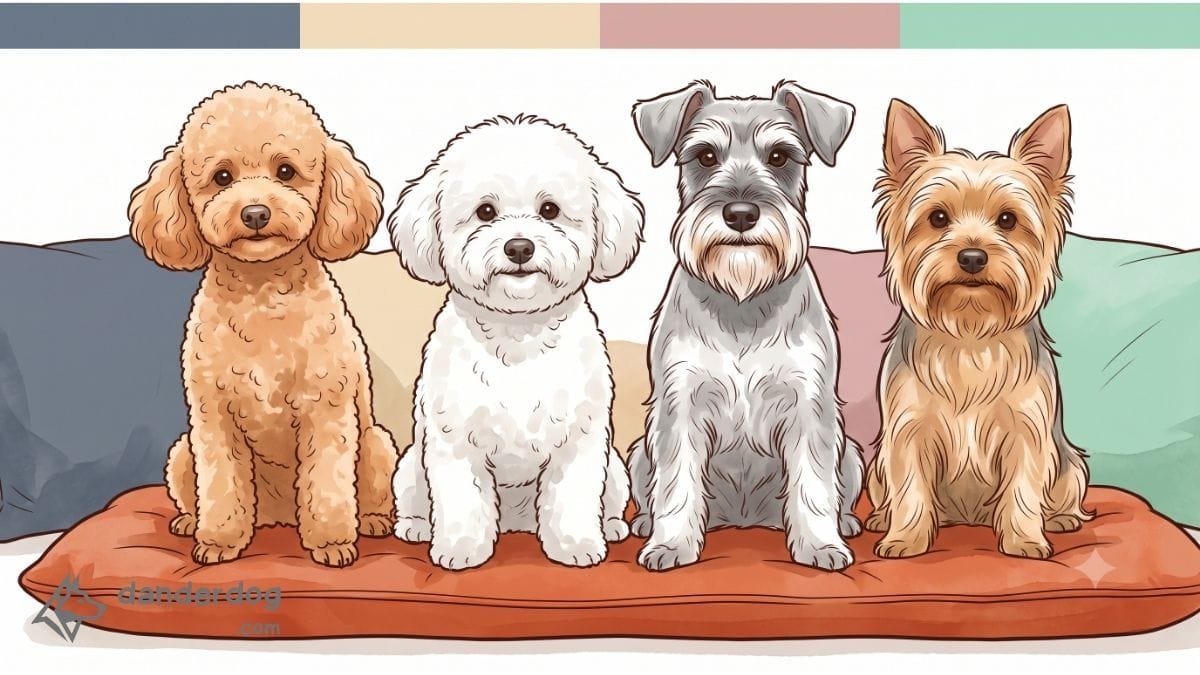
I went looking for the most hypoallergenic dog, and I came back with the part the breeders leave off: no dog is truly hypoallergenic.
Hypoallergenic is a marketing word. It means a breed that sheds less and is sold as easier on people with allergies. Thintk poodles, bichons, schnauzers, and the doodle crosses.
Here is the honest version, and it is smaller than the brochure. These breeds can lower your odds of a bad reaction. But every one of them still makes the proteins people react to, and I will keep saying it: the single dog matters more than the breed on the label.
Who this is for: you have dog allergies, or someone in your family reacts, and you want to know if a “hypoallergenic” breed is worth it. This matters before you spend money, and before you risk having to rehome a dog.
If you have asthma or a history of bad reactions, treat this as background reading and see an allergist first. This page never gives you a green light.
Key takeaways
- No dog is 100 percent hypoallergenic. Every dog makes allergy-causing proteins.
- The trigger is dander and saliva, not loose hair. Dander is tiny flakes of dead skin. Low shedding is not the same as low allergen.
- When researchers measured the main dog allergen across breeds, the “hypoallergenic” ones carried as much or more than normal breeds.
- Two dogs of the same breed can differ more than two breeds do. The single dog is the thing that counts.
- Some people react only to male dogs. That one fact changes the plan for a lot of families.
- The most useful step costs nothing: spend real time with the exact dog before you commit.
Are hypoallergenic dogs real?
Not in the way the word promises.
No breed is allergy-proof, and the science is fairly settled. Some breeds do shed less and drop less loose hair, which is a real comfort. It is not the allergy guarantee people think they are buying.
Here is the study that anchors the whole topic. A 2012 study in the Journal of Allergy and Clinical Immunology measured Can f 1 (the main protein in a dog’s skin and saliva that people react to). The team checked breeds sold as hypoallergenic, like the Labradoodle, Poodle, Spanish Water Dog, and Airedale, against Labradors and a mixed control group.
The result surprised me. The marketed-as-hypoallergenic dogs had more allergen in their hair and coat, not less. And there was no real difference in the allergen floating around their homes.
The authors said it plainly: no evidence for calling any breed hypoallergenic. A US home-dust survey the year before found the same thing from the other side. There was no way to group hypoallergenic breeds into homes with less dog allergen.
I am not sharing this to talk you out of a poodle. I am sharing it because you are about to make a 10-to-15-year decision, and you deserve the real number, not the brochure.
The label sells dogs. It does not lower the protein in your living room.
That is why the rest of this page is about odds and testing, not safe lists.
What makes a dog hypoallergenic?
Nothing makes a dog fully hypoallergenic.
A few traits shift the odds a little: a low-shedding coat, less drool, and less dander. The trait people fixate on, shedding, matters the least, because loose hair only carries the allergen.
The thing you are allergic to is a protein. The main one is Can f 1, which a dog makes in its skin and saliva (spit).
A few more proteins, named Can f 2 through Can f 6, sit behind it. When a dog licks its coat, the saliva dries and flakes off with dead skin. That is what floats into the air and lands in your nose.
A dog that sheds very little still makes dander, and it still licks itself. So it still spreads allergen around your home.
That gap, between low shedding and low allergen, is where I watched most hypoallergenic shopping go wrong. Picture a clean-looking counter that is still covered in dust. The dog looks tidy, but the allergen is still there.
Reacting to a pet is common in the United States. National survey data puts dog sensitization at about 12 percent of Americans aged 6 and older. Carrying those antibodies does not always mean you get symptoms, but it does mean this is nowhere near a niche worry.
If you are one of them, take the science over the marketing. You are managing a protein, not a haircut.
Do hypoallergenic dogs still have dander?
Yes.
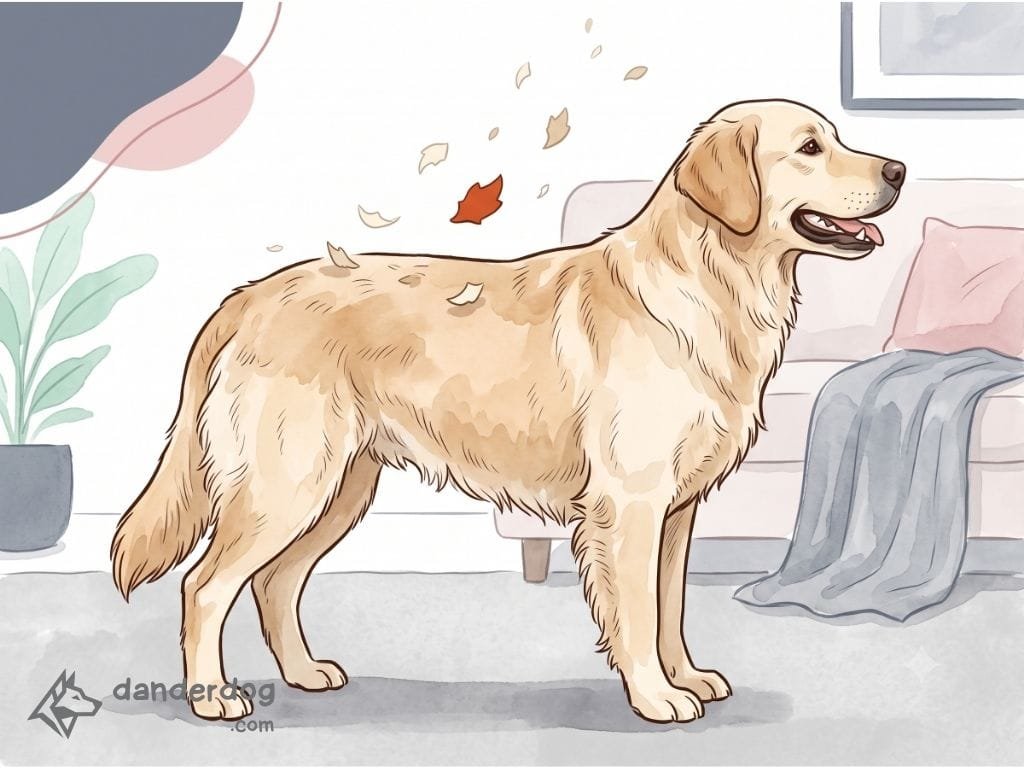
Every dog with skin makes dander, hypoallergenic breeds included, because dander is just tiny shed skin. A curly, non-shedding coat can trap that dander against the body instead of dropping it in the room. That sounds like good news, but it is not the whole story.
The trapped allergen still sits on a dog you have to groom. And grooming stirs it right back into the air.
There is one detail I keep coming back to, because it breaks the myth so cleanly. One breed study measured Can f 1 in dog saliva.
Keep its size in mind: four breeds, eight dogs each, sampled through a year.
The Portuguese Water Dog is the exact breed the Obama family chose for their daughter’s allergies. It carried the highest saliva allergen of those four, above the Shiba Inu, the Chihuahua, and the Labradoodle, and about three times the level of the Labradors used for comparison.
The most famous allergy dog in the country was not a low-allergen dog. It was a low-shedding one, and the two got confused at the highest level possible.
If your reaction comes from dander and saliva, and it usually does, a non-shedding coat manages the mess more than the allergen. That is the whole trap in one sentence.
Which dog breeds are considered hypoallergenic?
Two groups carry the reputation: the low-shedding purebreds and the poodle crosses.
I sort them into three honest classes, because the label on the tin hides a real difference.
The safest bets are the AKC low-allergen purebreds, dogs with an established low-shedding coat like the Poodle, Bichon Frise, and Miniature Schnauzer.
Next are the designer hybrids, the poodle crosses like the Goldendoodle and Labradoodle.
Their coats are a genetic coin flip, which I dig into in the guide to mixed dog breeds that don’t shed.
Last are the adjacent low-shed breeds like the Shih Tzu and Yorkshire Terrier. They shed little, but nothing ever tied them to low allergen.
The AKC keeps its own list along these lines. They are reasonable starting points, not a promise, and I do not think they all deserve the same trust.
So I built the table I wish someone had handed me when I started this research. It is not a shedding chart. It grades how well each type earns its low-allergen reputation, using the honest breed labels I use throughout this site.
One thing to notice before you read it: nothing earns an A. That is not me hedging. That is the finding, and I graded it that way on purpose.
The Breed Confidence Matrix
| Breed / type | Honest label | Coat | Shedding | Allergen confidence | The honest note |
|---|---|---|---|---|---|
| Poodle (Standard, Mini, Toy) | AKC low-allergen | Curly single coat | Very low | B | Best-documented low shedder, but measured high for coat allergen in the 2012 study. Grooming-heavy. |
| Bichon Frise | AKC low-allergen | Curly double coat | Very low | B | Small, low-shed, predictable coat. Needs frequent grooming to manage trapped dander. |
| Miniature Schnauzer | AKC low-allergen | Wiry double coat | Low | B | Sheds little with regular hand-stripping or clipping. Solid odds, still individual-dependent. |
| Portuguese Water Dog | AKC low-allergen | Curly or wavy single coat | Low | C | Low shedder, but measured the highest salivary allergen of the four breeds in one small study. The Obama dog, and a cautionary tale. |
| Maltese | AKC low-allergen | Silky single coat | Low | C | Little loose hair, but constant self-grooming spreads saliva through the coat. |
| Goldendoodle / Labradoodle / Cockapoo | Designer hybrid | Unpredictable (curly to flat) | Variable | C | Coat inheritance is a lottery. A single litter can produce a low-shedder and a shedder. Buying a puppy is buying a guess. |
| Shih Tzu | Adjacent low-shed | Long double coat | Low | D | Sheds little, but nothing links the breed to low allergen. Low-shed reputation, not a low-allergen one. |
| Yorkshire Terrier | Adjacent low-shed | Silky single coat | Low | D | Hair-like coat sheds less, allergen output still normal. Small size means less total dog, not less allergen per dog. |
I ran the grades from B to D on purpose. An A would mean a breed you can trust to be safe, and the evidence says that dog does not exist.
A grade B is the best real-world bet, still with a test-first asterisk. A grade D breed earns its spot on shedding lists, but not on allergen ones. Putting it on a hypoallergenic list is the exact mix-up I built this page to undo.
Does low shedding mean low allergen?
No, and this is the line to tape to your fridge.
Low shedding and low allergen are two different things that marketing merged into one word. A dog can shed almost no hair and still coat your home in Can f 1, because the allergen rides on dander and dried saliva, not on loose fur.
People ask a version of this about terriers a lot, so here it is plainly. Some terriers, like the wiry-coated Miniature Schnauzer, shed little. But “are terriers hypoallergenic” has no clean yes.
Coat type varies a lot across terriers, and none of them get a pass on dander. The wiry coat is a shedding feature, not an allergy feature.
Here is the myth stack in one place, because these four beliefs cost people money.
| The belief | What is actually true |
|---|---|
| It is the hair I am allergic to | It is the protein in dander and saliva. Hair is just the carrier. |
| A non-shedding coat means low allergen | Low-shed breeds measured as much coat allergen as ordinary dogs, sometimes more. |
| Hypoallergenic homes have less allergen in the air | Studies found no difference in household allergen between breed groups. |
| Bathing solves it | It helps for about three days, then levels rebound. It is maintenance, not a fix. |
The one lever with real proof behind it is not the breed at all. It is washing. A 1999 study in the Journal of Allergy and Clinical Immunology found that bathing a dog cut the major allergen by more than 80 percent on the coat.
But the levels climbed back to normal within about three days. So the researchers said a dog needs a wash about twice a week to keep allergen down.
That is a demanding schedule. It puts a lot of weight on using a gentle formula your dog can handle that often. If you get this far, the dog shampoo for sensitive skin guide covers what survives twice-weekly baths without wrecking the coat.
What are the best hypoallergenic dogs for families?
If you forced me to name picks for a family that has thought it through, I would say a Poodle of any size, a Bichon Frise, or a Miniature Schnauzer.
These are the proven low-shedding purebreds, the grade-B breeds above. They have predictable coats and tend to do well in busy homes.
Note the wording I used. Best odds, not safe choices.
Two honest cautions before anyone falls for a puppy photo. First, the doodle crosses are the most popular family hypoallergenic pick, and the least predictable. A Goldendoodle puppy can inherit either parent’s coat, and you cannot tell at eight weeks which allergen future you are getting.
Second, if anyone in the house has asthma or has had a serious reaction, no breed on this page clears them to get a dog. That is an allergist conversation and a supervised-exposure plan. Every time, no exceptions.
For the family angle, I keep a full breakdown in the best dogs for allergies guide. It includes the asthma-household routing that matters most here.
How do you actually pick a low-allergen dog?
You test before you commit.
The single dog and your own body decide the outcome, not the breed name. Two dogs of the same breed can differ more than two breeds do, so a safe breed is only a starting filter.
Here is the order that actually protects you.
- See an allergist first if you have asthma or a history of strong reactions. Get tested. Ask if you react to Can f 5, the male-dog allergen, because that answer can change everything (more below).
- Shortlist by odds, not by cuteness. Start with the grade-B breeds. Treat doodles as a guess, and drop the breeds that only made the list for low shedding.
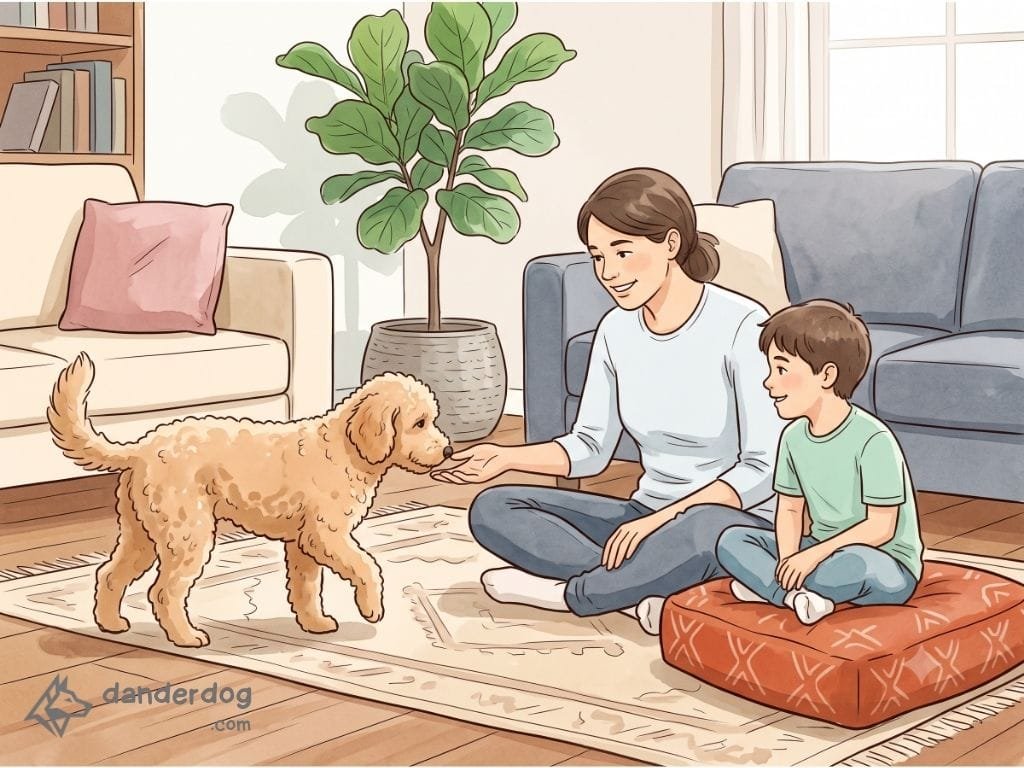
- Spend real, repeated time with the exact dog, not the breed. Visit the same animal more than once, ideally in its own home. Stay long enough for a reaction to show. Two hours beats two minutes.
- Push into real exposure. Let the dog lick your hand, then touch your face. Sit where its dander settles. A polite ten-minute meet-and-greet hides the thing you need to know.
- Have a written plan for a no. Decide, before you fall in love, what happens if you react. Get a return agreement with the breeder or rescue, and have an honest talk with your household. This is the step people skip and regret.
That checklist is the tool I most wanted this page to give you, and it is unglamorous on purpose. It works for the same reason the breed lists let you down. Your reaction is personal, and the only reliable test is you, in a room, with that dog.
Why the male-dog question matters
| If you react to… | What it means | What to do |
|---|---|---|
| Can f 5 only (male-specific) | You may tolerate a female dog, since Can f 5 comes from the male prostate | Ask your allergist for component testing before ruling out dogs entirely |
| Can f 1 and other components | Standard dog allergy, not sex-specific | Breed choice and washing matter more; test the individual dog |
| Untested | You are guessing, and guessing is expensive here | Get component-resolved testing before committing to a dog |
That first row is not a footnote. Can f 5 is made in the prostate, so male dogs produce it and females do not. In one Italian clinic series, about seven in ten dog-sensitized patients carried antibodies to it.
That opens a door for some people. A small double-blind trial found that children who reacted only to Can f 5 tested positive to male dog dander and almost never to female dander. Seven children, so treat it as a lead worth testing rather than a promise.
Neutering is the softer half of the claim. Nobody has measured Can f 5 in the same dog before and after castration, though a 2026 review of animal allergy diagnostics says people sensitized only to Can f 5 may tolerate a female or a neutered dog. Treat the female dog as the tested route and the neutered male as the reasonable one.
What settles it for you is component-resolved testing, a detailed allergy test that shows the exact protein you react to. If no one has ever tested you that way, it is the cheapest high-value step on this whole page.
Common mistakes
- Reading “hypoallergenic” as “safe.” At best it means fewer common triggers. It is not a guarantee, and no breed clears an asthma or severe-allergy household on its own.
- Shopping by shedding. Loose hair is the mess. Dander and saliva are the allergy. A no-shed coat can still set you off.
- Buying a doodle puppy untested. In a young cross, coat and allergen output are a coin flip. If it has to be a doodle, meet adult dogs from the same lines.
- Doing one short meet-and-greet. Ten polite minutes proves nothing. You need real, repeated exposure over hours.
- Skipping the allergist and the component test. The Can f 5 question alone can turn a no dogs ever into a workable plan.
FAQ
Can a dog be truly hypoallergenic?
No. Every dog makes allergy-causing proteins in its skin and saliva, so no breed, cross, or single dog is fully hypoallergenic. Some breeds shed less and may lower your odds of a reaction, but hypoallergenic means lower risk, never zero risk. Test with the exact dog before you commit.
Do hypoallergenic dogs shed at all?
Most so-called hypoallergenic breeds shed very little loose hair, which is a real convenience. But that is not the same as low allergen. Even a non-shedding coat carries dander and dried saliva, the real triggers, so a low-shed dog can still cause a reaction in a sensitive person.
Are Goldendoodles and other doodles hypoallergenic?
Not reliably. Doodles are crosses, and coat type is unpredictable in a cross, so one puppy in a litter can shed very little while its littermate sheds normally. A doodle can be a good match, but buying a young one is buying a guess. Meet adult dogs from the same breeding first.
Why am I allergic to some dogs but not others?
Two reasons. Allergen levels vary a lot from one dog to the next, and there is the male-dog allergen Can f 5. Some people react mainly to Can f 5, which comes from the prostate, so male dogs make it and females do not. In a small double-blind trial, children who reacted only to Can f 5 tested positive to male dog dander but rarely to female dander, so a female dog, and probably a neutered male, may be workable for them. A component test from an allergist tells you whether that is your situation.
Does bathing a dog reduce allergens?
Yes, but only for a while. Washing sharply cuts the major allergen on the coat, but the levels return to normal within about three days, so it takes a wash about twice a week to keep them down. That schedule only works with a gentle formula your dog can tolerate, which is why shampoo choice matters for allergy homes.
Are hairless dogs hypoallergenic?
No more than coated breeds. Hairless dogs like the Chinese Crested still make dander and saliva, the real triggers, and skin contact can even be more direct. Less hair does not mean less allergen. Judge a hairless breed the same way as any other: test your own reaction to the exact dog.
Sources
Sources (10)SourcesShow sourcesHide sources
- Vredegoor DW, Willemse T, Chapman MD, Heederik DJJ, Krop EJM. Can f 1 levels in hair and homes of different dog breeds: lack of evidence to describe any dog breed as hypoallergenic. Journal of Allergy and Clinical Immunology. 2012;130(4):904-909. https://pubmed.ncbi.nlm.nih.gov/22728082/
- Nicholas CE, Wegienka GR, Havstad SL, Zoratti EM, Ownby DR, Johnson CC. Dog allergen levels in homes with hypoallergenic compared with nonhypoallergenic dogs. American Journal of Rhinology & Allergy. 2011;25(4):252-256. https://pubmed.ncbi.nlm.nih.gov/21819763/
- Hodson T, Custovic A, Simpson A, Chapman M, Woodcock A, Green R. Washing the dog reduces dog allergen levels, but the dog needs to be washed twice a week. Journal of Allergy and Clinical Immunology. 1999;103(4):581-585. https://pubmed.ncbi.nlm.nih.gov/10200004/
- Gergen PJ, Mitchell HE, Calatroni A, et al. Sensitization and exposure to pets: the effect on asthma morbidity in the US population. Journal of Allergy and Clinical Immunology: In Practice. 2018;6(1):101-107. https://pubmed.ncbi.nlm.nih.gov/28694047/
- Villalta D, Milanese M, Da Re M, et al. Frequency of allergic sensitization to Can f 5 in North East Italy. An analysis of 1403 ISACs 112 (component resolved diagnosis) collected retrospectively. European Annals of Allergy and Clinical Immunology. 2019;51(4):186-189. https://pubmed.ncbi.nlm.nih.gov/30983305/
- Hilger C, Sekerel BE, van Hage M, et al. Algorithms in allergy: molecular allergology in the context of animal allergy. Allergy. 2026;81(6):2217-2220. https://pubmed.ncbi.nlm.nih.gov/41582700/
- Mattsson L, Lundgren T, Everberg H, Larsson H, Lidholm J. Prostatic kallikrein: a new major dog allergen. Journal of Allergy and Clinical Immunology. 2009;123(2):362-368. https://pubmed.ncbi.nlm.nih.gov/19135239/
- Schoos AMM, Chawes BL, Bloch J, et al. Children monosensitized to Can f 5 show different reactions to male and female dog allergen extract provocation: a randomized controlled trial. Journal of Allergy and Clinical Immunology: In Practice. 2020;8(5):1592-1597. https://pubmed.ncbi.nlm.nih.gov/31863911/
- Petrak-Ron BA, et al. Is there such a thing as a hypoallergenic dog? Journal of Allergy and Clinical Immunology. 2013;131(2):AB90. https://www.jacionline.org/article/S0091-6749(12)02939-9/fulltext
- American Kennel Club. Hypoallergenic dogs. https://www.akc.org/dog-breeds/hypoallergenic-dogs/
Guides in this series
- Best dogs for allergies: the honest shortlist
- Worst dog breeds for allergies: the honest list
- Hypoallergenic guard dogs: what actually holds up
- Mixed dog breeds that don’t shed: what’s really true
- Non shedding labs (coming soon)
- Are pitbulls hypoallergenic (coming soon)
My honest take, after all of it: take the boring lesson. Meet the actual dog, more than once, before you decide. The breed on the paperwork is only a starting filter.
The dog in the room is the answer. So which specific dog have you spent real time with, and how did your body actually react?
— Adrian V.