
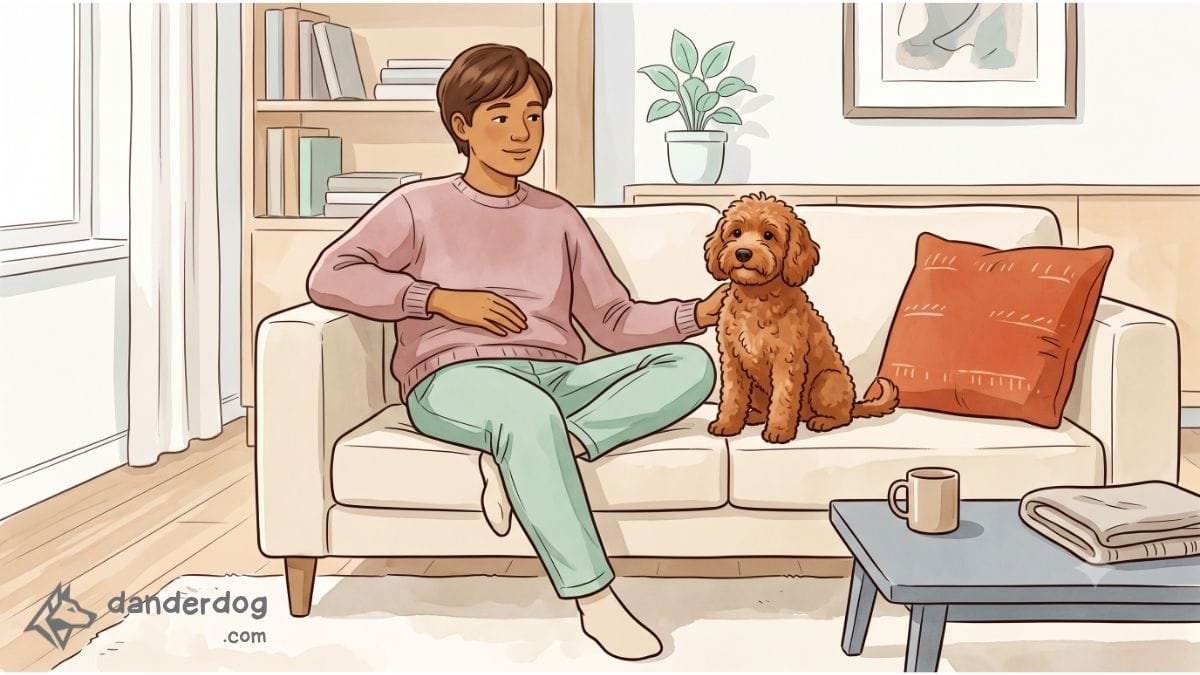
I’ll give you the honest answer before I give you the list: the best dog for dog allergies is the individual dog you spent real time with and did not react to.
Breed is a filter, not a guarantee.
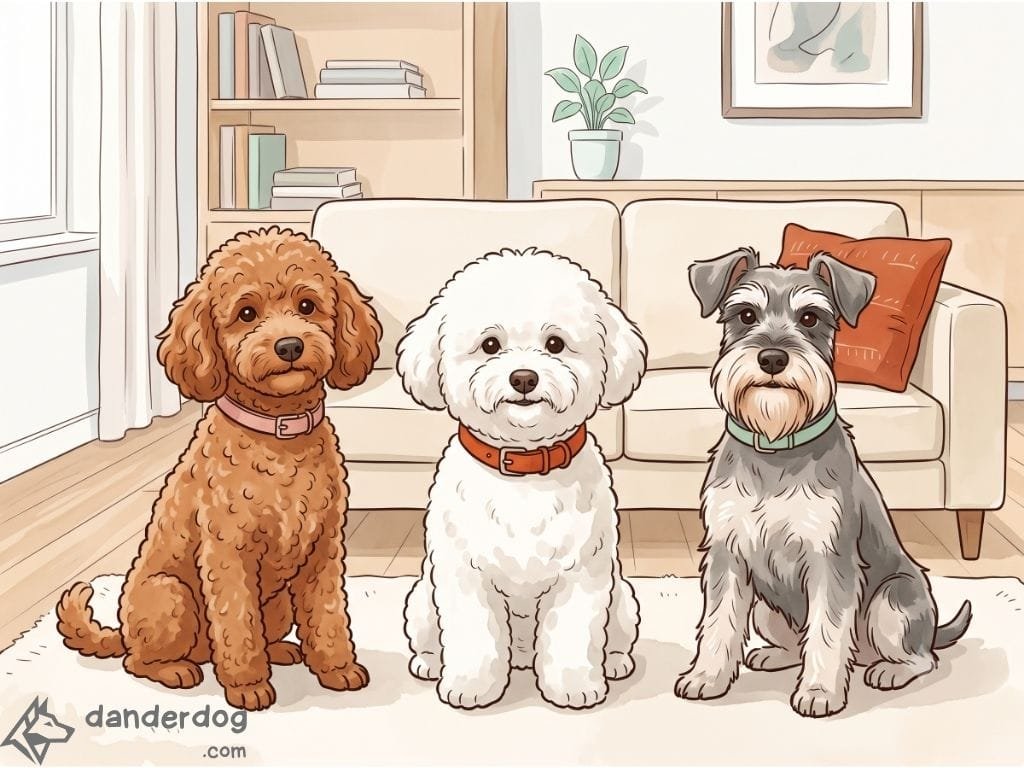
That said, some breeds give better odds than others, and if you are starting from scratch I know a shortlist saves you time. The reliable picks are the low-shedding purebreds, mainly the Poodle, Bichon Frise, and Miniature Schnauzer, because their coats are predictable and they drop little dander-carrying hair.
Before you get attached to any of them, read the one rule that overrides the whole list: no breed is safe for a severe or asthmatic reaction without an allergist first.
For the science behind why no dog is truly allergy-proof, start with the hypoallergenic dogs guide.
Who this is for: someone with mild to moderate dog allergies choosing a first dog, or a family trying to find a breed a reactive member can live with. If the allergic person has asthma or a history of strong reactions, this page is background only. See an allergist and arrange supervised exposure before you go further.
Key takeaways
- The best dog for allergies is the specific one you tested, not a breed off a list.
- Poodle, Bichon Frise, and Miniature Schnauzer are the safest bets on odds. They are still not guaranteed.
- Allergen output varies more between two dogs of one breed than between breeds.
- Asthma or severe allergy: allergist first, always. No breed clears you on its own.
- Ask about the male-dog allergen Can f 5. Some people tolerate a female or neutered male.
- Grooming, bathing, and a clean bedroom do more day to day than breed choice.
What is the best dog for dog allergies?
A poodle, for most people.
The best dog for dog allergies is usually a Standard, Miniature, or Toy Poodle, because it is the most consistent low-shedding breed and comes in a size for most homes. The Bichon Frise and Miniature Schnauzer are close behind. These are the breeds with predictable coats and a long track record with allergy households.
The reason these three keep winning is boring, and boring is the point. Their coats do not drop much loose hair, so less dander gets spread around the room. That is a real, measurable convenience.
It is not the same as producing less allergen, which is why I will not let even the best pick on this page skip a test drive with the actual dog. The breed narrows your odds. Your own nose closes the deal.
Which dog breeds are best for allergy sufferers?
The low-shedding purebreds the AKC groups as allergy-friendly.
That means the Poodle, Bichon Frise, Schnauzer, Portuguese Water Dog, Maltese, and the hairless or wiry terriers like the Kerry Blue and American Hairless. Predictable coats are the common thread.
I scored the shortlist by the household each one actually fits.
| Breed | Honest label | Size | Best for | The honest note |
|---|---|---|---|---|
| Poodle (Standard/Mini/Toy) | AKC low-allergen | Small to large | Most households; pick the size to the space | Best all-round odds. Grooming every 4 to 6 weeks is non-negotiable. |
| Bichon Frise | AKC low-allergen | Small | Apartments, first-time owners | Cheerful, low-shed, needs frequent grooming to manage trapped dander. |
| Miniature Schnauzer | AKC low-allergen | Small | Active families wanting a sturdy small dog | Wiry coat sheds little with regular clipping or hand-stripping. |
| Portuguese Water Dog | AKC low-allergen | Medium | Active owners with time to groom | Low shedder, but one study measured high salivary allergen. Test carefully. |
| Maltese | AKC low-allergen | Small | Quiet homes, lap-dog owners | Silky single coat. Constant self-grooming spreads saliva, so bathe regularly. |
| Goldendoodle / Labradoodle | Designer hybrid | Medium to large | Only after meeting the specific adult dog | Coat is a lottery in a cross. A puppy can inherit a shedding coat. Do not buy on the label. |
Notice the last row. The doodle crosses are the most-searched “allergy dog” and the least predictable, because a crossbred puppy can inherit either parent’s coat.
They can work. They are just the opposite of a sure thing, so meet grown dogs from the same lines before you commit.
What are the best dogs for allergies and asthma?
There is no safe breed for asthma.
I will not hand you a list that pretends otherwise. If the allergic person has asthma or has ever had a strong reaction, the honest best “dog for allergies and asthma” is the one an allergist clears after testing and a supervised trial with the specific animal.
This is the section where I break from every listicle that ranks breeds for asthmatics. Asthma turns an allergic reaction from an annoyance into an airway problem, and a breed name cannot manage that risk. The order that protects you looks like this:
- See an allergist and get component-resolved testing before you shortlist anything.
- Ask specifically about Can f 5, the male-dog allergen. A meaningful share of dog-allergic people react mainly to it. That can mean a spayed female or neutered male is tolerable when a male dog is not.
- Arrange real, supervised exposure to the exact dog, over more than one visit, before any commitment.
- Build the home plan first: air filtration, a dog-free bedroom, and a bathing routine.
That is not me being cautious for legal reasons. It is the one place on this site where getting it wrong sends someone to the emergency room, so it gets the strict version.
Are there small dogs for allergy sufferers?
Yes.
Small dogs are often a good fit for allergy households, because a smaller dog means less total coat, less saliva, and less dander in absolute terms. The Bichon Frise, Maltese, Miniature Schnauzer, and Toy or Miniature Poodle are the standouts, and they suit apartments too.
One caution so this does not become a myth of its own. Small does not mean low allergen per pound of dog. A Yorkie still produces normal dog allergen, it just produces a smaller dog’s worth of it.
That is a genuine reduction in a small flat, but it is a volume effect, not a magic coat.
Here is how the low-shed small breeds actually compare once you weigh apartment fit against the grooming they need to keep dander down.
| Small breed | Coat | Apartment fit | Grooming load | The honest note |
|---|---|---|---|---|
| Toy / Miniature Poodle | Curly, low-shed | Excellent | High (clip every 4 to 6 weeks) | Best small-dog odds. The coat only stays low-dander if you keep the grooming up. |
| Bichon Frise | Curly double, low-shed | Excellent | High | Cheerful and tiny, but trapped dander needs frequent baths and brushing. |
| Maltese | Silky single | Good | Medium to high | Constant self-grooming spreads saliva, so bathe on a schedule. |
| Miniature Schnauzer | Wiry, low-shed | Good | Medium (clip or hand-strip) | The sturdiest of the four. Sheds little with regular coat work. |
If a tiny, low-shed companion is what you want, the small hypoallergenic dogs guide breaks the category down properly.
How do you actually reduce your reaction to a dog?
You lower your exposure to dander and saliva.
Those proteins are the trigger, not the dog’s presence. The levers with real effect are washing the dog, filtering the air, and keeping the bedroom dog-free.
Breed choice sets your baseline. Daily habits move the number.
Washing is the one with the strongest evidence. A 1999 study in the Journal of Allergy and Clinical Immunology found a bath cut the major dog allergen by more than 80 percent on the coat.
The levels crept back within about three days. That is why the researchers landed on washing roughly twice a week.
That cadence is only sustainable with a gentle formula, so the dog shampoo for sensitive skin guide is worth a look before you start. Pair it with a HEPA purifier in the rooms you use most and a rule that the dog sleeps somewhere other than your pillow, and you have done more than any breed swap can do.
| Lever | What it does | Effort | Honest verdict |
|---|---|---|---|
| Bathe the dog ~2x/week | Cuts coat allergen more than 80 percent, temporarily | High | Best-evidenced single step. Needs a gentle formula to sustain. |
| HEPA air purifier | Removes airborne dander from the rooms you use most | Low (set and forget) | Steady background help. Size it to the room. |
| Dog-free bedroom | Protects the 7 to 8 hours you breathe the same air longest | Low (a rule, not a chore) | High value for the effort. The easiest win most people skip. |
| Choose a low-shed breed | Lowers how much dander-carrying hair spreads | One-time decision | Sets your baseline, does not manage the daily load on its own. |
Common mistakes
- Trusting the breed over the test. The single dog decides your reaction. Meet it, repeatedly, before you commit.
- Treating “asthma” like a normal allergy. It is not. Allergist first, no exceptions, no breed pass.
- Buying a doodle puppy on faith. Coat and allergen output are unpredictable in a young cross. Meet adults from the same lines.
- Ignoring the male-dog question. The Can f 5 test can turn a “no dogs” verdict into a workable plan. It is cheap to ask.
- Choosing a breed and skipping the home setup. Filtration, bathing, and a dog-free bedroom carry the daily load.
FAQ
What is the best dog for someone with allergies?
There is no single best breed, but the strongest odds sit with the Poodle, Bichon Frise, and Miniature Schnauzer, because their low-shedding coats spread less dander. None is guaranteed. The best dog for you is the specific one you spend real time with and tolerate, so test before you commit.
Are any dogs completely safe for allergy sufferers?
No dog is completely safe for allergies. Every dog produces the proteins people react to, in dander and saliva, so no breed is allergy-proof. Some breeds lower your odds of a reaction, and good grooming and home habits lower them further, but “safe” is the wrong word. Aim for lower risk and test first.
What are the best dogs for allergies and asthma?
For asthma or severe allergy, the best choice is whichever dog an allergist clears after testing and a supervised trial. No breed is safe on its own for asthmatic reactions. See an allergist, arrange real exposure to the specific dog, and set up air filtration and a dog-free bedroom before making any decision.
Are small dogs better for allergies?
Small dogs can help because a smaller dog produces less total dander and saliva than a large one, which matters in a small home. It is a volume effect, not a lower allergen coat. A small breed still needs testing and grooming, but Bichons, Maltese, and Toy Poodles are reasonable low-shed starting points.
Can I be allergic to one dog and not another of the same breed?
Yes. Allergen levels vary widely between individual dogs, even within a breed, and the male-dog allergen Can f 5 means some people react to males but not females. This is exactly why breed lists only narrow the field. You still have to test your reaction to the specific dog.
Sources
Sources (6)SourcesShow sourcesHide sources
- Vredegoor DW, Willemse T, Chapman MD, Heederik DJJ, Krop EJM. Can f 1 levels in hair and homes of different dog breeds: lack of evidence to describe any dog breed as hypoallergenic. Journal of Allergy and Clinical Immunology. 2012;130(4):904-909. https://pubmed.ncbi.nlm.nih.gov/22728082/
- Hodson T, Custovic A, Simpson A, Chapman M, Woodcock A, Green R. Washing the dog reduces dog allergen levels, but the dog needs to be washed twice a week. Journal of Allergy and Clinical Immunology. 1999;103(4):581-585. https://pubmed.ncbi.nlm.nih.gov/10200004/
- Käck U, Asarnoj A, Grönlund H, et al. Molecular allergy diagnostics refine characterization of children sensitized to dog dander. Journal of Allergy and Clinical Immunology. 2018;142(4):1113-1120. https://pubmed.ncbi.nlm.nih.gov/29852259/
- American Kennel Club. Best dog breeds for allergy sufferers: dogs with non-shedding coats. https://www.akc.org/expert-advice/dog-breeds/hypoallergenic-dog-breeds/
- American Academy of Allergy, Asthma & Immunology. Hypoallergenic dogs and dog allergies: myths and facts. https://www.aaaai.org/tools-for-the-public/conditions-library/allergies/dog-myths
- Cleveland Clinic. Are any dogs hypoallergenic? https://health.clevelandclinic.org/are-any-dogs-hypoallergenic
Related guides
- Hypoallergenic dogs: what the label really means. The cluster hub and the science.
- Small hypoallergenic dogs. The apartment-friendly shortlist.
- Dog shampoo for sensitive skin. What survives twice-weekly bathing.
My honest take, after all the lists: if a dog is in your future, plan the meeting, not just the breed. Book real time with the exact dog and pay attention to how your body responds over a few hours, not a few minutes. So what has your own experience been, one specific dog at a time?
— Adrian V.