
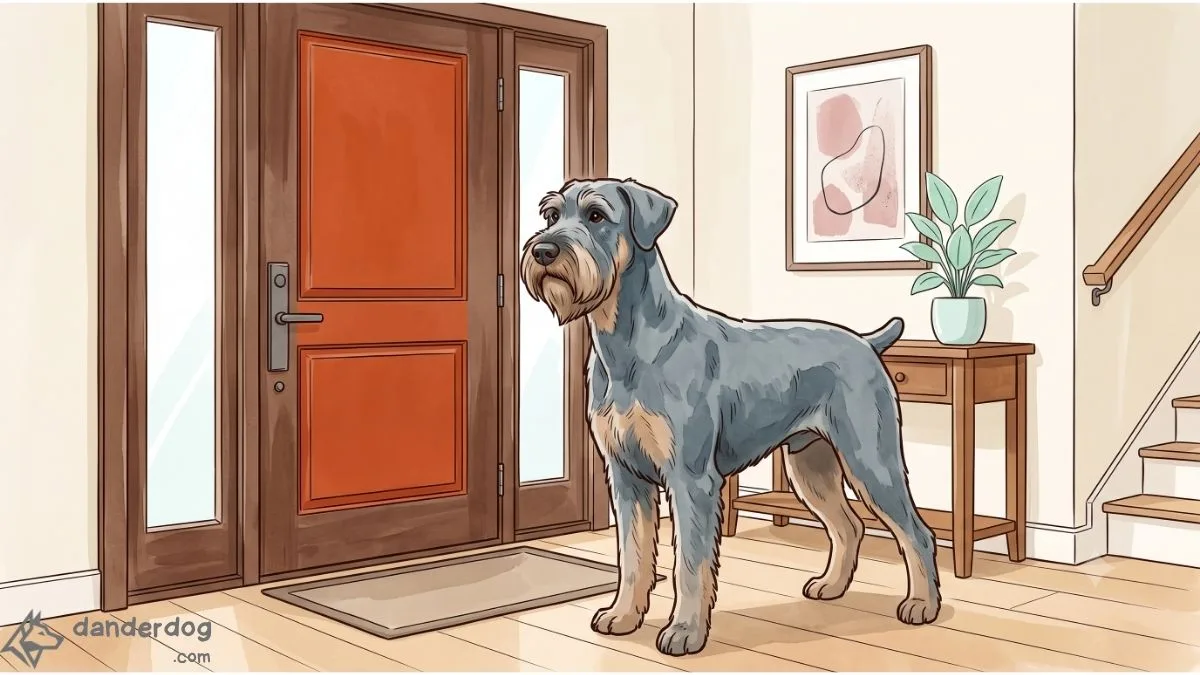
I’ll be straight about this one: hypoallergenic guard dogs are a real but short list, and the honest version has an asterisk on both words.
A handful of low-shedding breeds can do protective work, mainly the Giant Schnauzer, Standard Poodle, Bouvier des Flandres, and Airedale Terrier.
None of them is truly hypoallergenic, because low shedding is not the same as low allergen, a point worth understanding before you buy a dog for two jobs at once.
The full science sits in the hypoallergenic dogs guide.
What you are really shopping for is a breed that sheds little AND has genuine guarding instinct, which is a smaller overlap than the marketing suggests. Get either half wrong and you end up with a shedding dog, a friendly dog that will not guard, or a reaction you did not plan for.
Who this is for: someone with a dog allergy who also wants a protective dog, weighing whether the two goals can coexist. If the allergic person has asthma or severe reactions, treat this as reading only and see an allergist before committing to any dog, guard breed included.
Key takeaways
- A few low-shedding breeds guard well: Giant Schnauzer, Standard Poodle, Bouvier des Flandres, Airedale Terrier.
- Low shedding is not low allergen. These breeds still make dander and saliva.
- “Guard dog” covers two jobs: a watchdog that alerts, and a guardian that acts. Most low-shed breeds are better at the first.
- Protection is trained, not bought. Coat type has nothing to do with whether a dog will actually guard.
- Bigger guard breeds mean more dog, so more total allergen. Size cuts against the allergy goal.
- Test your reaction to the specific adult dog before you commit.
Are there hypoallergenic guard dogs?
Yes, in a loose sense.
Some low-shedding breeds have protective instincts, but none is allergy-proof. No dog is truly hypoallergenic, guard breeds included, so the honest framing is “low-shedding protective breeds,” not “safe for allergies.”
The confusion is baked into the search term. People pair “hypoallergenic” with “guard dog” hoping to solve two problems with one animal, and a few breeds do fit both boxes. What does not carry over is any promise about allergen load.
A Giant Schnauzer sheds little and guards seriously, and it still coats your home in dander over time. Both things are true, and only one of them is what the word “hypoallergenic” implies.
What are the best hypoallergenic guard dogs?
The Giant Schnauzer and Bouvier des Flandres.
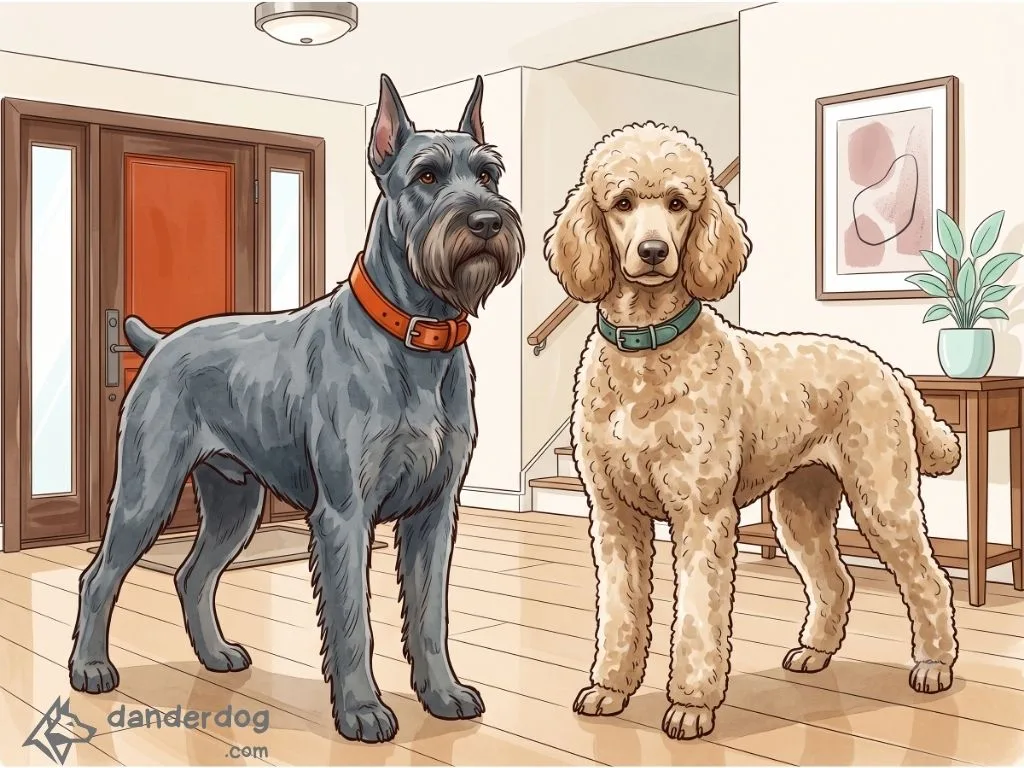
Those two are the low-shedding breeds that do serious guarding, with the Standard Poodle and Airedale Terrier as alert, trainable watchdogs.
I scored them on both jobs at once, protection and the honest allergen picture, because a table that only ranks shedding misses the whole point.
| Breed | Honest allergen label | Shedding | Protection role | The honest note |
|---|---|---|---|---|
| Giant Schnauzer | AKC low-allergen | Low (wiry coat) | Strong guardian | The standout for both jobs. Powerful, needs experienced training and real exercise. |
| Bouvier des Flandres | Adjacent low-shed | Low | Strong guardian | Big, watchful, sheds little. Heavy grooming, and a lot of dog to manage. |
| Standard Poodle | AKC low-allergen | Very low | Alert watchdog | Smart and vigilant, will alert but is not a protection breed. Best low-shed odds. |
| Airedale Terrier | AKC low-allergen | Low (wiry coat) | Alert watchdog | Bold and loyal, historically a service dog. Wiry coat sheds little. Note: tested in the “hypoallergenic” group that still measured high coat allergen. |
| Soft Coated Wheaten Terrier | AKC low-allergen | Low | Watchdog only | Friendly to a fault. Will bark an alert, will not guard. Low-shed but sociable. |
| Bergamasco Sheepdog | Adjacent low-shed | Very low | Flock guardian instinct | Corded coat sheds almost nothing. Rare, independent, needs a job. |
The split in that protection column is the honest heart of it. A Giant Schnauzer or Bouvier will genuinely guard.
A Standard Poodle or Wheaten will bark and then probably make friends. If you actually need protection rather than a doorbell with fur, that difference matters more than the coat.
Do guard dogs that don’t shed really exist?
They do, but “don’t shed” oversells it.
Every one of these breeds sheds a little. The wiry and curly coats just trap loose hair instead of dropping it around the house, and that trapped hair still has to be brushed and clipped out, which is where the dander goes back into the air.
So a non-shedding guard dog is really a low-shedding one with a coat that needs upkeep. The Bergamasco and Standard Poodle come closest to genuinely shed-free, and both demand serious grooming to stay that way.
If a spotless floor is the dream, the trade is a standing grooming commitment, not a coat that maintains itself.
Here is how the three coat types on this list actually compare, and where each one quietly fails the allergy test even when the floor stays clean.
| Coat type (breeds) | Shedding | Grooming to keep it low-shed | What it does not do |
|---|---|---|---|
| Wiry (Giant Schnauzer, Airedale) | Low | Hand-strip or clip every 4 to 8 weeks | Does not lower the dander or saliva allergen. The Airedale measured high coat allergen in the 2012 study. |
| Curly (Standard Poodle) | Very low | Clip every 4 to 6 weeks, brush often | Traps dander that returns to the air when you groom. Low mess is not low allergen. |
| Corded (Bergamasco, rough Bouvier) | Very low | Separate the cords by hand, heavy upkeep | Near shed-free, yet still makes normal Can f 1 in skin and saliva. |
Does a non-shedding coat make a guard dog low-allergen?
No.
This is the sentence the whole page is built to protect you from. A coat that sheds little releases less dander-carrying hair into the room, which helps with mess, but the dog still produces the same allergenic proteins in its skin and saliva.
Low shedding manages the visible problem, not the invisible one.
The evidence here is blunt. A 2012 study in the Journal of Allergy and Clinical Immunology measured the major dog allergen across breeds marketed as hypoallergenic, including the wiry-coated Airedale on this list. Those breeds carried as much allergen in their coats as ordinary dogs, sometimes more.
A tidy floor told you nothing about the allergen load.
For a guard dog you will live with closely for a decade, I think that gap is worth respecting up front, which is why I hold the test-with-the-actual-dog rule here just as hard as anywhere else.
Can a hypoallergenic dog actually protect your home?
Yes, but the coat has nothing to do with it.
A low-shedding dog can absolutely protect a home, but the protection comes from breed instinct and training. A Giant Schnauzer raised and trained as a guardian is a serious deterrent.
A poorly socialized dog of the same breed is a liability, and no amount of low shedding changes that.
Be honest with yourself about which job you need. Most households want a dog that notices and alerts, a watchdog, and nearly every breed on this list does that well.
Actual guardian work, a dog trained to intervene, is a bigger commitment. It needs professional training and an experienced owner, and it belongs with the Giant Schnauzer or Bouvier, not the friendly Wheaten.
The coat was never the variable that decided this. The training is.
| Role | What the dog actually does | Low-shed breeds that fit |
|---|---|---|
| Watchdog | Notices strangers and barks an alert. Deters by presence and noise. | Standard Poodle, Airedale Terrier, Soft Coated Wheaten |
| Guardian | Alerts and is trained to intervene. Needs an experienced owner. | Giant Schnauzer, Bouvier des Flandres |
| Flock/property guardian | Independent protective instinct over territory or livestock. | Bergamasco Sheepdog |
Common mistakes
- Reading “low-shedding” as “low-allergen.” It manages hair and mess, not the proteins you react to.
- Expecting a watchdog to be a guardian. Alerting and intervening are different jobs. Most low-shed breeds do the first.
- Thinking the coat makes the guard dog. Protection is trained and socialized, never bought off a breed list.
- Ignoring size against your allergy goal. A bigger guard breed is more total dog, so more total allergen.
- Skipping the test with the specific dog. Guarding instinct and your own reaction both vary by the individual animal.
FAQ
Are there any truly hypoallergenic guard dogs?
No dog is truly hypoallergenic, guard breeds included. A few low-shedding protective breeds like the Giant Schnauzer, Bouvier des Flandres, and Standard Poodle drop less dander-carrying hair, which helps with mess, but they still produce the allergenic proteins in dander and saliva. Treat them as lower risk, not allergy-proof, and test first.
What is the best low-shedding guard dog?
For real guarding, the Giant Schnauzer is the standout low-shedding breed, with the Bouvier des Flandres close behind. Both are powerful, need experienced owners and serious training, and shed little thanks to wiry or dense coats. The Standard Poodle and Airedale Terrier are strong alert watchdogs rather than true guardians.
Do guard dogs that don’t shed still cause allergies?
Yes. Guard dogs marketed as non-shedding still make dander and saliva, the actual allergy triggers, so they can cause reactions in a sensitive person. Their coats trap loose hair rather than eliminate allergens. Regular grooming and bathing help, but no low-shedding guard breed is a guarantee against allergy symptoms.
Can a Poodle be a guard dog?
A Standard Poodle is a smart, alert watchdog that will bark to warn you, but it is not a natural protection or attack breed. It suits someone who wants a low-shedding dog that notices strangers, not a trained guardian. For genuine protective work, a Giant Schnauzer or Bouvier des Flandres is the better low-shed choice.
Does a bigger guard dog mean more allergens?
Generally yes. A larger dog has more skin and coat, so it produces more total dander and saliva than a small dog, even if the breed is low-shedding. If keeping allergen exposure low is a priority, a big guard breed works against that goal, which is a real trade-off to weigh before choosing size for protection.
Sources
Sources (5)SourcesShow sourcesHide sources
- Vredegoor DW, Willemse T, Chapman MD, Heederik DJJ, Krop EJM. Can f 1 levels in hair and homes of different dog breeds: lack of evidence to describe any dog breed as hypoallergenic. Journal of Allergy and Clinical Immunology. 2012;130(4):904-909. https://pubmed.ncbi.nlm.nih.gov/22728082/
- Hodson T, Custovic A, Simpson A, Chapman M, Woodcock A, Green R. Washing the dog reduces dog allergen levels, but the dog needs to be washed twice a week. Journal of Allergy and Clinical Immunology. 1999;103(4):581-585. https://pubmed.ncbi.nlm.nih.gov/10200004/
- American Kennel Club. Giant Schnauzer breed profile. https://www.akc.org/dog-breeds/giant-schnauzer/
- American Kennel Club. Best guard dogs. https://www.akc.org/dog-breeds/best-guard-dogs/
- American Kennel Club. Bouvier des Flandres breed profile. https://www.akc.org/dog-breeds/bouvier-des-flandres/
Related guides
- Hypoallergenic dogs: what the label really means. The cluster hub and the science.
- Best dogs for allergies: an honest shortlist. If protection is not the priority.
- Dog shampoo for sensitive skin. For the twice-weekly bathing routine.
My honest take: if you need both a low-shedding coat and a real guardian, go in knowing you are asking for two uncommon traits in one dog, and that training decides the second one. So which job do you actually need, an alert or an intervention? Answer that honestly before you shop.
— Adrian V.