
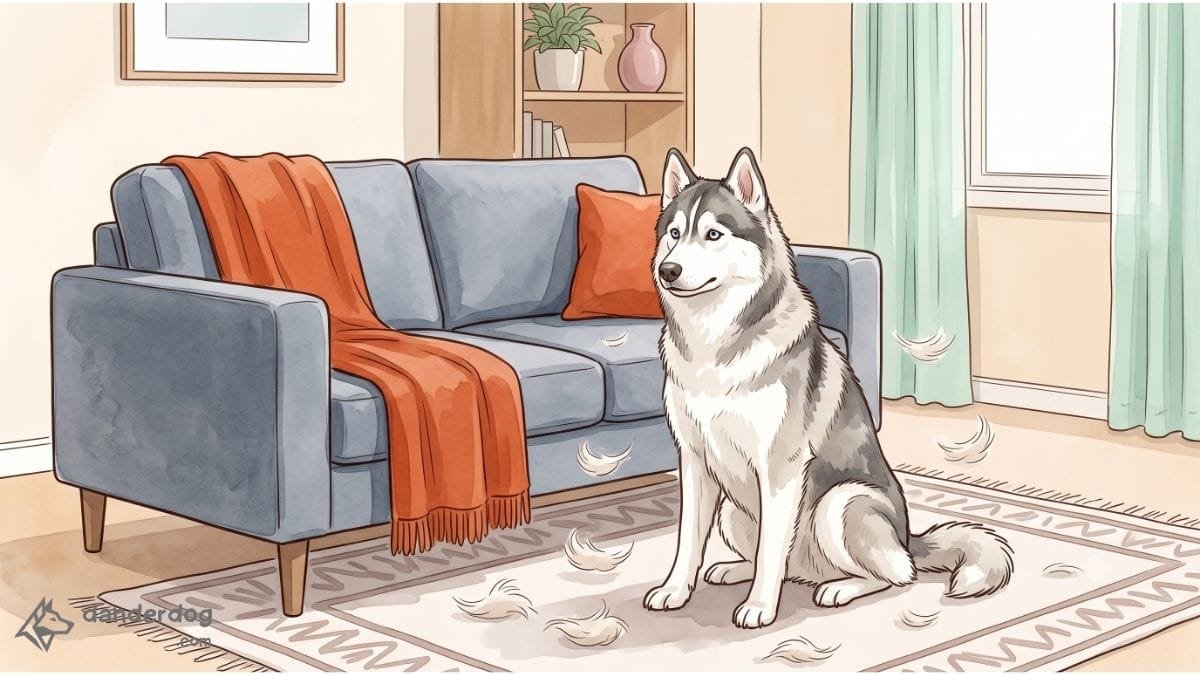
I went in expecting a tidy shedding blacklist, and the research talked me out of it.
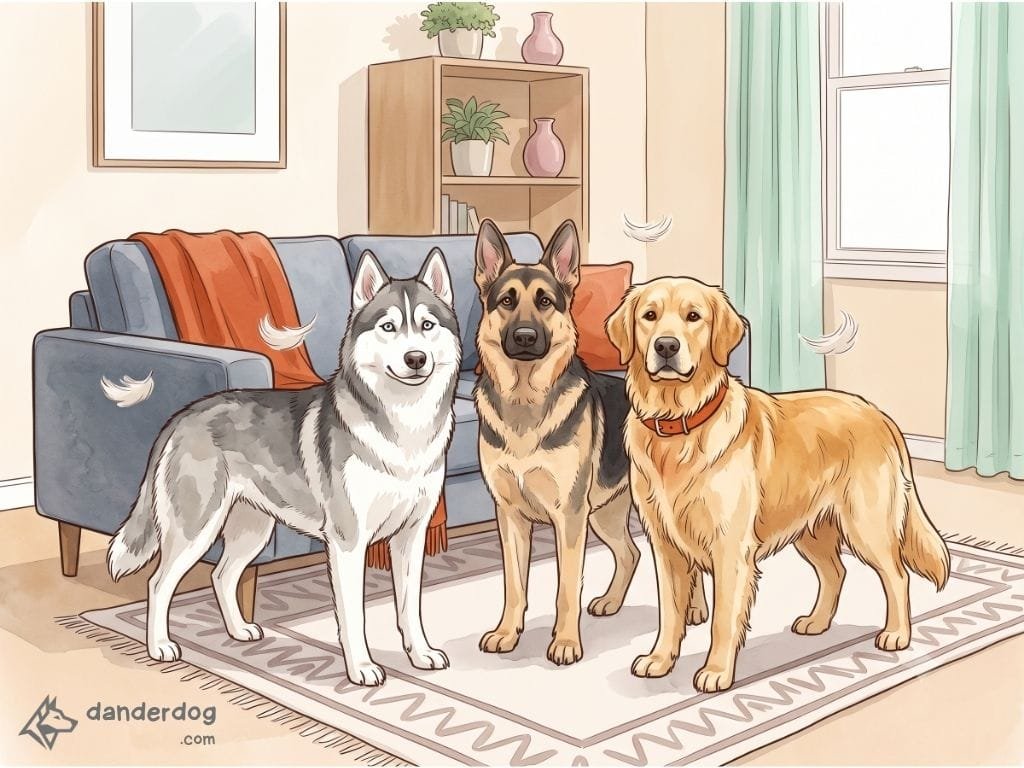
The worst dog breeds for allergies are the heavy, double-coated shedders and the big droolers: Siberian Husky, Alaskan Malamute, German Shepherd, Labrador and Golden Retriever, Akita, Chow Chow, Samoyed, and the slobbery Saint Bernard.
They spread the most dander-carrying hair and saliva around your home.
Here is the part the ranking lists skip, and it changes how you should read this page. Shedding turns out to be a weak predictor of how much allergen actually ends up in your house.
The stronger predictors are where the dog is allowed to go and how much it licks and drools.
So this is less a blacklist and more a caution list, and the honest counterweight to it is the hypoallergenic dogs guide, which covers why no breed is truly allergy-proof either.
Who this is for: someone with a dog allergy deciding which breeds to avoid, or an owner who already has a heavy shedder and wants to know what actually helps. If the allergic person has asthma or severe reactions, see an allergist before committing to any dog, and treat every breed here as a firm no until a professional says otherwise.
Key takeaways
- The usual “worst” breeds are heavy double-coated shedders and heavy droolers.
- Shedding volume barely predicts your home allergen level. Where the dog goes predicts it better.
- Saliva is a major allergen source, so face-lickers and droolers deserve real caution.
- No breed is “hyper-allergenic.” Allergen output varies more between individual dogs than between breeds.
- A big dog is more total dog, so more total dander, regardless of coat.
- If you already own one, management beats regret: washing, a dog-free bedroom, and air filtration.
What are the worst dog breeds for allergies?
The heavy double-coated shedders and the big droolers.
Both spread more of the proteins people react to. Dander clings to loose hair, so a dog dropping fur constantly seeds the whole house, and saliva carries the major dog allergen straight onto skin, furniture, and your hands.
I pulled the names that show up on nearly every list and sorted them by the real reason each one is hard to live with.
Notice it is not always the coat.
| Breed | The trait | Why it is hard on allergies | The honest note |
|---|---|---|---|
| Siberian Husky | Thick double coat, “blows” it twice a year | Massive seasonal fur release spreads dander everywhere | The poster dog for heavy shedding. Grooming barely keeps up in coat-blow season. |
| Alaskan Malamute | Dense double coat | Year-round shedding, heavy in spring and fall | Bigger than a Husky, so more total dog and more total dander. |
| German Shepherd | Double coat, constant shedder | Sheds daily plus seasonal blows; hair gets into everything | Often called a “German shedder” by owners, with reason. |
| Labrador / Golden Retriever | Dense water-resistant double coat | Year-round shedding despite short-to-medium hair | America’s favorite dogs are also two of the steadiest shedders. |
| Akita / Chow Chow | Heavy double coat | Thick undercoat sheds in large amounts | Chows also tend to be low-tolerance for frequent bathing. |
| Samoyed | Profuse white double coat | Sheds large tufts year-round | Beautiful and relentless. The coat is the whole commitment. |
| Saint Bernard | Heavy drooler | Saliva carries the major allergen, spread by drool | The drool matters more than the coat here. Underrated risk. |
| Pug | Short coat, but sheds a lot and licks faces | Constant shedding plus saliva delivered to your face | Proof that small and short-haired does not mean allergy-friendly. |
The Saint Bernard and Pug rows are the ones people underestimate. Both make the list for saliva, not fur, which is the clue to what actually drives your reaction.
Why are heavy-shedding dogs bad for allergies?
Because loose hair is the delivery vehicle for dander.
Dander is the flakes of dead skin that carry the major dog allergen. More shed hair means more dander spread across floors, furniture, and clothing, and more of it lifting into the air as you move around.
The hair itself is not the allergen. It is the courier.
This is why the “top 20 shedding dogs” lists and the “worst for allergies” lists overlap so heavily. A dog that coats your couch in fur is also coating it in the protein you react to.
That part of the popular wisdom holds up. The next part does not, and it is worth slowing down for.
Does shedding actually predict your allergies?
Not as much as you would think.
A 2010 study in Annals of Allergy, Asthma & Immunology measured the dog allergen Can f 1 in real homes. It compared the levels against coat type, dander level, and shedding.
Only one dog trait was linked to how much allergen was in the house: whether the dog was spayed or neutered. What mattered more was how long the dog stayed indoors and whether it was allowed on the surfaces being measured.
Read that again, because it quietly guts the premise of every worst-breeds ranking. The heaviest-shedding dog kept out of the bedroom and off the couch can leave less allergen where you breathe than a low-shedder that sleeps on your pillow.
Shedding fills your vacuum. Access to your space fills your airways.
When I went looking for the study that would justify a clean breed blacklist, this is the one I found instead, and it points at your house rules more than the dog’s coat.
That does not make shedding irrelevant. It makes it one factor among several, and not the one with the most leverage.
Here is how the factors actually rank once you sort them by what the home-allergen research measured, not by what the breed lists assume.
| Factor | Predictive strength | What the research shows |
|---|---|---|
| Dog allowed in the bedroom or on the furniture | Strong | Access to the spaces you use most tracked with higher measured Can f 1 in the home. |
| Hours the dog spends indoors | Strong | More indoor time means more allergen deposited where you actually breathe. |
| Spayed or neutered | Moderate | The one dog trait linked to home allergen in the 2010 study. Neutered dogs measured lower. |
| Coat type or breed | Weak | Breed and coat were poor predictors of the allergen load measured in real homes. |
| Shedding volume | Weak | Heavy shedding fills the vacuum. It does not reliably predict what reaches your airways. |
What about droolers and face-lickers?
They can be worse than some shedders.
Saliva is a major source of dog allergen, and droolers and face-lickers deliver it directly.
The main dog allergen, Can f 1, is produced in the tongue and salivary tissue, so a lick puts it straight onto your skin, and a Saint Bernard’s drool spreads it around the house on contact.
Saliva actually carries a richer mix of allergy-triggering proteins than dander does. Research on dog saliva as an allergen source found more of these proteins in saliva than in dander. That reframes the whole list.
A short-haired dog that licks your face, a Pug for instance, can trigger you as reliably as a fluffy one that never comes near you.
If your reaction spikes when a dog greets you rather than when you sit in a hairy room, saliva is the likely culprit, and coat length was never going to save you.
Are there really hyper-allergenic dog breeds?
No.
There is no such thing as a hyper-allergenic breed, just as there is no truly hypoallergenic one.
Every dog produces the same allergenic proteins, and the amount varies more between two individual dogs of the same breed than it does between breeds.
A “worst” breed is a worst-odds bet, not a guarantee of misery.
The evidence here is the same evidence that debunks the hypoallergenic label from the other side. When Can f 1 was measured across breeds, coat type and breed turned out to be weak predictors of allergen load, and individual dog factors dominated.
So a specific Labrador might bother you less than a specific Poodle.
This is exactly why I keep pushing the same honest move, for a “worst” breed or a “best” one: spend real time with the individual dog before you decide. The breed sets the odds. Your own reaction settles the bet.
What if you already own one of these breeds?
You manage the exposure.
Rehoming a dog you love over a manageable allergy is a last resort, not a first one. The levers with real evidence are washing the dog, keeping it out of the bedroom, and filtering the air, and they work regardless of how much the breed sheds.
Washing is the strongest single step. A 1999 study in the Journal of Allergy and Clinical Immunology found a bath cut the major allergen by more than 80 percent on the coat.
The levels rebounded within about three days. That is why the researchers recommended washing roughly twice a week.
That cadence needs a gentle formula, so the dog shampoo for sensitive skin guide is a sensible next stop. Pair it with a dog-free bedroom and a HEPA purifier in your main rooms, and you have pulled the two levers that the home-allergen research says actually move the number.
| What you can change | Effect on your exposure | Evidence-backed? |
|---|---|---|
| Keep the dog out of the bedroom | Large. Protects the hours you breathe one room longest | Yes. Bedroom access tracked with higher home allergen. |
| Bathe the dog ~2x/week | Large but temporary. Cuts coat allergen 80%+ for a few days | Yes. Measured in home and clipping studies. |
| HEPA air purifier in main rooms | Moderate. Removes airborne dander steadily | Partly. Helps airborne load; not a standalone fix. |
| Pick a lower-shedding breed | Small to moderate. Less hair to spread dander | Weak. Shedding was a poor predictor of home allergen. |
Common mistakes
- Ranking breeds by shedding alone. Shedding fills the vacuum, not necessarily your airways. Access to your space matters more.
- Ignoring droolers and lickers. Saliva is a major allergen source. A Pug can trigger you as fast as a Husky.
- Assuming short hair is safe. Short-coated breeds like the Pug still shed and still lick. Coat length is not the variable.
- Treating a “worst” breed as hopeless. Individual dogs vary widely. Test your reaction to the specific animal before ruling it out.
- Rehoming before trying management. Washing, a dog-free bedroom, and filtration solve a lot of “I can’t keep this dog” situations.
FAQ
What is the single worst dog breed for allergies?
There is no single worst breed, but the Siberian Husky and Alaskan Malamute are the usual top picks because their thick double coats shed enormously and spread dander through the house. Heavy droolers like the Saint Bernard rank high too, since saliva carries the major dog allergen. Individual dogs still vary a lot.
Are Labradors and Golden Retrievers bad for allergies?
Yes, relatively. Both are steady year-round shedders with dense double coats, so they spread plenty of dander-carrying hair despite their short-to-medium fur. They are popular family dogs, not allergy-friendly ones. If someone in the home reacts to dogs, these are breeds to approach with caution and test first.
Do short-haired dogs cause fewer allergies?
Not reliably. Short-haired breeds like the Pug still shed and still produce dander and saliva, the actual triggers. Some short-haired dogs also lick and drool heavily, delivering allergen directly. Coat length is a weak predictor of your reaction. The individual dog and where it is allowed matter far more.
What are the worst dogs for allergies and asthma?
For asthma, treat every heavy-shedding and drooling breed as high risk, and do not rely on any breed being tolerable without testing. Asthma turns an allergic reaction into an airway problem, so see an allergist and arrange supervised exposure to the specific dog before making any decision. No breed is safe on its own for asthmatic reactions.
Can I keep a heavy-shedding dog if I have allergies?
Often, yes, with management. Washing the dog about twice a week, keeping it out of the bedroom, and running a HEPA purifier all lower your exposure, and the research says the dog’s coat matters less than these habits. If your reactions are mild to moderate, an owner with good routines can usually live with a shedder.
Sources
Sources (7)SourcesShow sourcesHide sources
- Nicholas CE, Wegienka GR, Havstad SL, et al. Dog characteristics and allergen levels in the home. Annals of Allergy, Asthma & Immunology. 2010;105(3):228-233. https://pubmed.ncbi.nlm.nih.gov/20800790/
- Polović N, Waden K, Binnmyr J, et al. Dog saliva, an important source of dog allergens. Allergy. 2013;68(5):585-592. https://pubmed.ncbi.nlm.nih.gov/23464525/
- Vredegoor DW, Willemse T, Chapman MD, Heederik DJJ, Krop EJM. Can f 1 levels in hair and homes of different dog breeds: lack of evidence to describe any dog breed as hypoallergenic. Journal of Allergy and Clinical Immunology. 2012;130(4):904-909. https://pubmed.ncbi.nlm.nih.gov/22728082/
- Hodson T, Custovic A, Simpson A, Chapman M, Woodcock A, Green R. Washing the dog reduces dog allergen levels, but the dog needs to be washed twice a week. Journal of Allergy and Clinical Immunology. 1999;103(4):581-585. https://pubmed.ncbi.nlm.nih.gov/10200004/
- Konieczny A, Morgenstern JP, Bizinkauskas CB, et al. The major dog allergens, Can f 1 and Can f 2, are salivary lipocalin proteins. Immunology. 1997;92(4):577-586. https://pubmed.ncbi.nlm.nih.gov/9497502/
- Morris DO. Human allergy to environmental pet danders: a public health perspective. Veterinary Dermatology. 2010;21(5):441-449. https://pubmed.ncbi.nlm.nih.gov/20374569/
- American Kennel Club. Dog shedding: when dogs shed most and how to manage it. https://www.akc.org/expert-advice/health/managing-dog-shedding/
Related guides
- Hypoallergenic dogs: what the label really means. The cluster hub and the science.
- Best dogs for allergies: an honest shortlist. The other side of this list.
- Dog shampoo for sensitive skin. For the twice-weekly bathing routine.
My honest take: if a breed on this list already owns your heart, do not let a ranking make the decision for you. Meet the specific dog, spend real hours with it, and see how your body responds before you rule it in or out. So which breed are you weighing, and is it the coat or the drool that worries you?
— Adrian V.